The vinyl siding that actually performs. Rigid Neopor foam permanently laminated to every 50-mil vinyl panel. R-2.0+ insulation built in. 160 mph wind resistance. Chromatix darker colors without warping. 22 colors including board-and-batten.
Premium Insulated Vinyl • R-2.0+ Insulation Built In • 160 mph Wind • Family-Owned Since 2005
Vinyl Siding That Doesn’t Wave, Crack, or Look Cheap
Standard hollow vinyl siding has real problems. It waves on the wall because it’s thin and flexes with temperature changes. It cracks in cold weather. It fades on the south face. Dark colors warp from heat. And it does nothing for your energy bills — zero R-value. You want vinyl for the zero-maintenance aesthetic and the budget fit, but you don’t want to install something that’ll look worn in 5 years.
CraneBoard is different vinyl. Every 50-mil vinyl panel ships with rigid Neopor foam permanently laminated to the back via TXL Lamination — 200% stronger bond than standard foam lamination. The foam gives CraneBoard R-2.0+ insulation value, impact absorption, and sound dampening (up to 45% noise reduction). Chromatix pigment technology lets CraneBoard offer dark colors (Graphite, Espresso, Harbor Blue) that would warp on standard vinyl. And the 160 mph wind rating beats most residential wind exposure in the Midwest.
The Four CraneBoard Technologies That Matter
CraneBoard isn’t just thicker vinyl. It’s a different product engineered around four specific technologies that address the real failure modes of standard hollow vinyl. Here’s what each does.
Neopor Insulation — R-2.0+ Built Into Every Panel
The Neopor foam is rigid graphite-enhanced expanded polystyrene (EPS) manufactured by BASF. The graphite particles reflect and absorb radiant energy, making Neopor 19 percent more efficient at insulating than standard white EPS foam at the same thickness. Every CraneBoard panel includes R-2.0+ insulation value. For comparison: fiber cement siding has R-0.5. Standard hollow vinyl has R-0.0. Over a typical McHenry County 2,000-square-foot siding job, R-2.0+ translates to real savings on heating and cooling bills through reduced thermal bridging at the wall studs.
Only CraneBoard uses Neopor in the siding industry. That’s a Westlake Royal Building Products distinction that separates their premium vinyl from the commodity hollow vinyl market — a real R-value advantage that shows up on the utility bill.
TXL Lamination — 200% Stronger Foam Bond
Generic foam-backed vinyl uses adhesive lamination that’s vulnerable to delamination over time — especially through freeze-thaw cycling, UV exposure, and thermal expansion. CraneBoard’s TXL Lamination is a factory process with a 200 percent stronger bond between the foam core and the vinyl panel. Not field-applied. Not adhesive-only. TXL is engineered for the freeze-thaw cycling that destroys ordinary laminated products in McHenry County winters.
The delamination failure mode on cheap foam-backed vinyl shows up as bubbling, waviness, or sections of foam pulling away from the vinyl face. I’ve seen it on 10-year-old installs from other brands. I haven’t seen it on CraneBoard. TXL is why.
Smart Track Moisture Management — Water Drains Instead of Sitting
Water gets behind siding. Driving rain, ice-dam melt, sprinkler overspray — it happens on every residential exterior. Standard vinyl and standard foam-backed vinyl trap water against the sheathing, creating mold and rot risk over time. CraneBoard’s Smart Track Moisture Management is exclusive to this product: engineered ridges on the back of the foam core create drainage channels that let water flow down and out instead of sitting against the wall.
For McHenry County climate — winter ice dams, spring driving rain, summer thunderstorm overflow — Smart Track matters. It’s the failure-mode prevention that keeps CraneBoard siding on the wall looking right 20 years in.
Chromatix — Dark Colors Without the Warping
Standard hollow vinyl can’t do dark colors well. Dark pigments absorb heat, the heat builds up in the panel, and the vinyl warps. That’s why commodity vinyl catalogs are mostly whites, grays, and beiges. Chromatix Color Protection is CraneBoard’s infrared-reflecting pigment technology — the pigments reflect IR radiation instead of absorbing it, reducing heat buildup in darker colors. CraneBoard ships in 22-plus colors including Graphite, Espresso, Harbor Blue, and Spruce that simply aren’t available on commodity vinyl.
For modern homes, contemporary remodels, and any project where the homeowner wants a bold color choice, Chromatix is what makes CraneBoard viable. The dark colors stay straight on the wall and hold color longer against UV exposure.
See CraneBoard Insulated Vinyl Installed by IHC
Real projects across McHenry County. No stock photos.
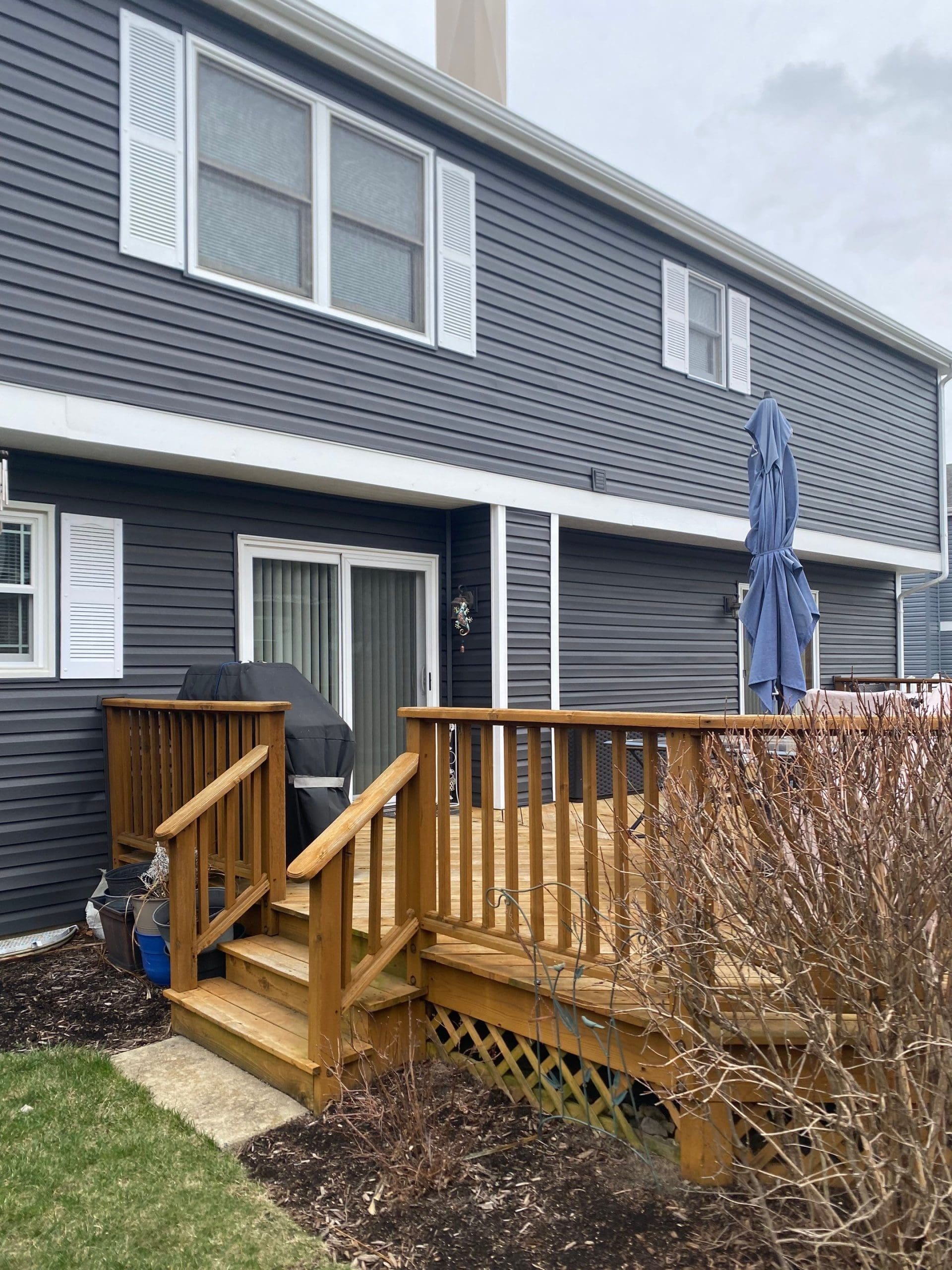
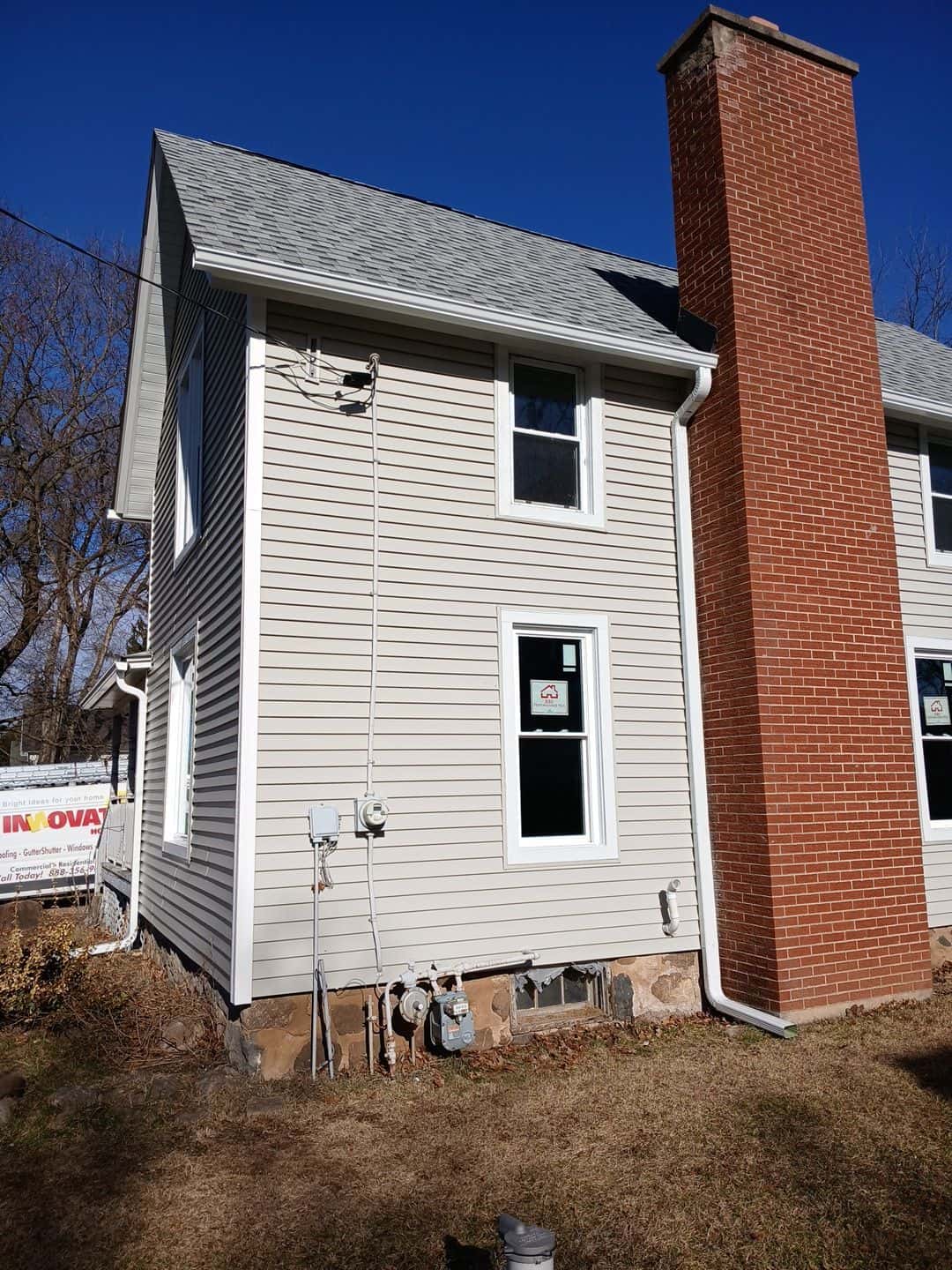
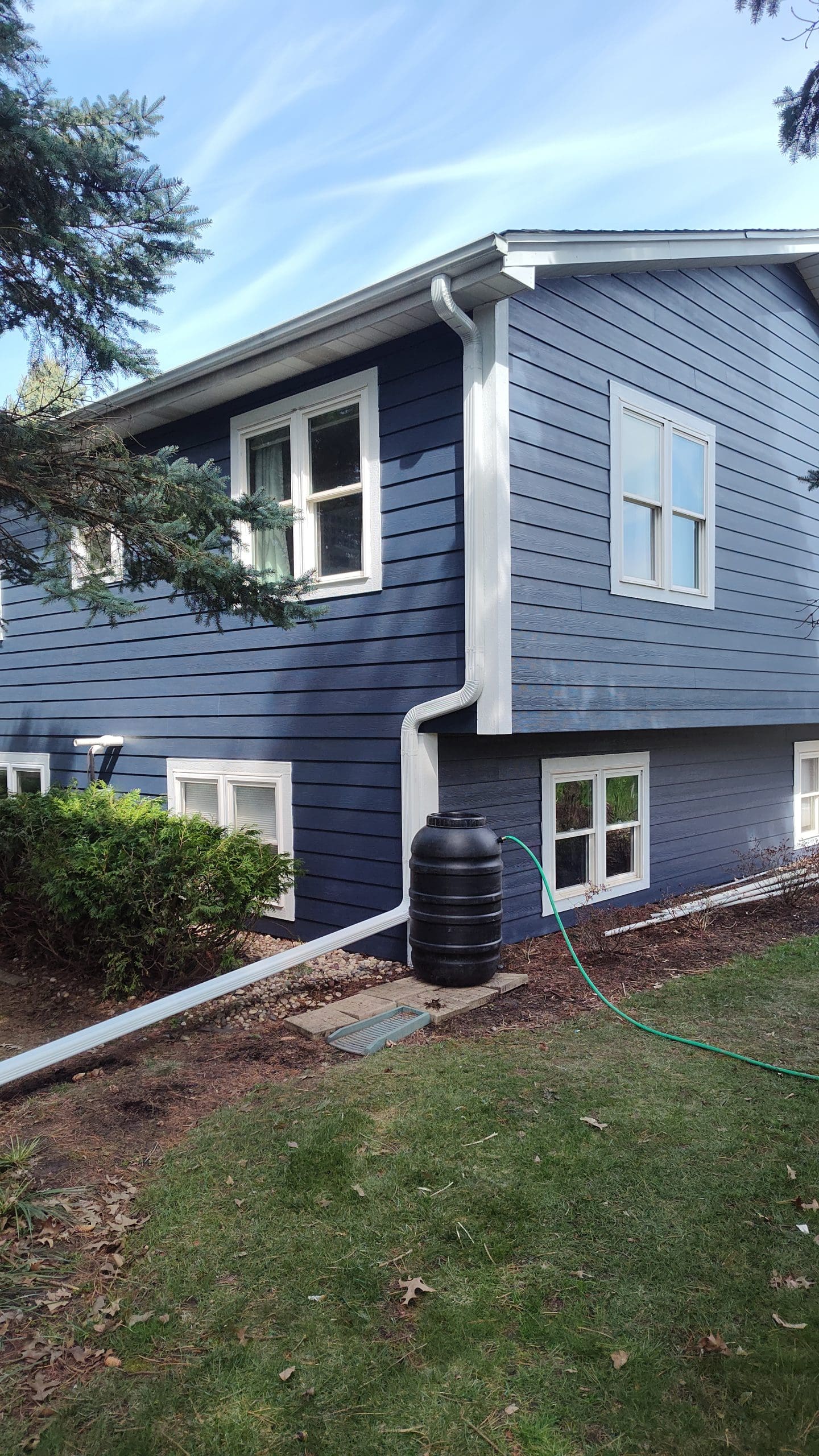
CraneBoard install — McHenry County, IL
Finished elevation — McHenry County, IL
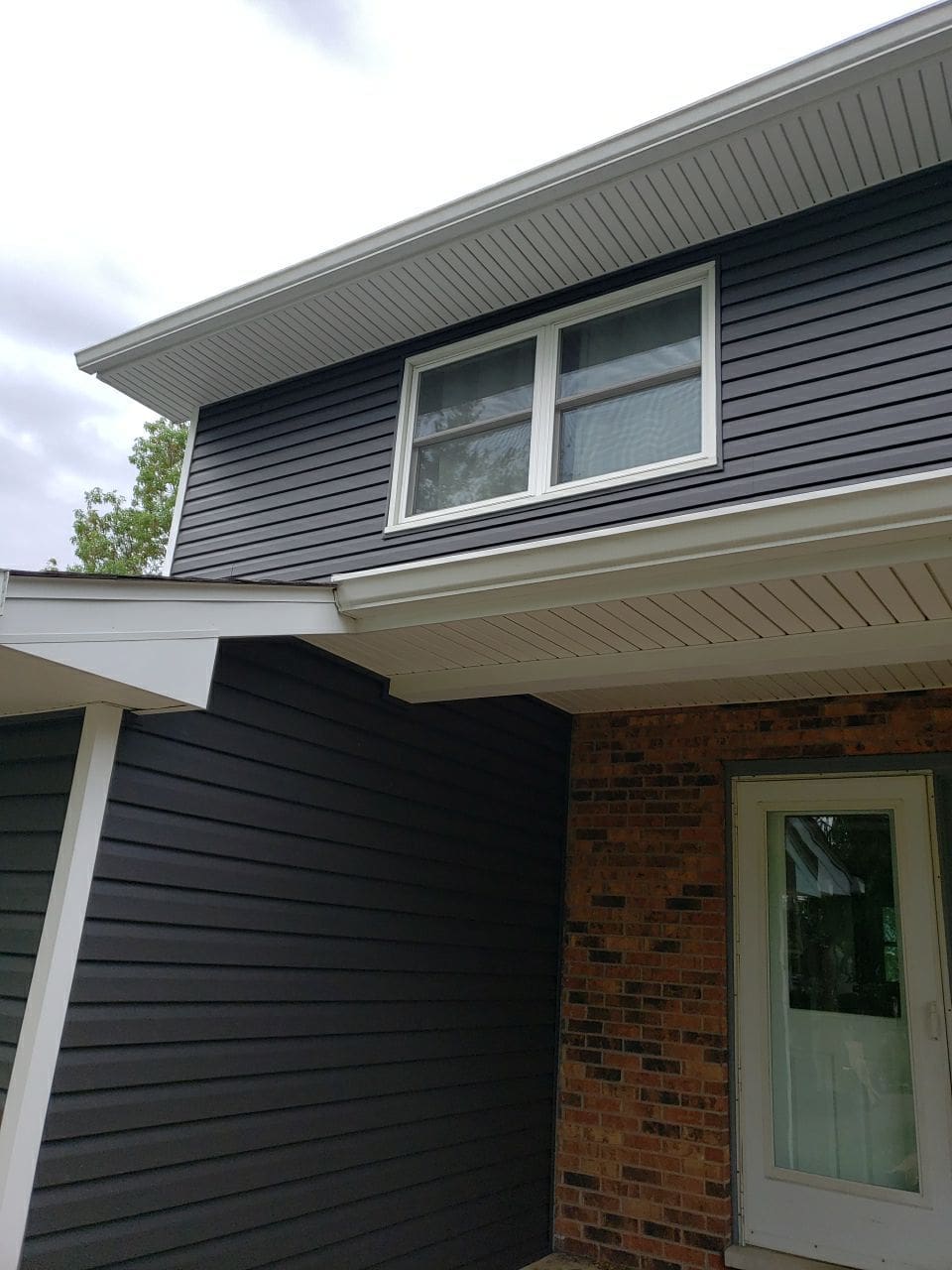
After photo — Woodstock, IL
Crystal Lake, IL
Gray premium vinyl install
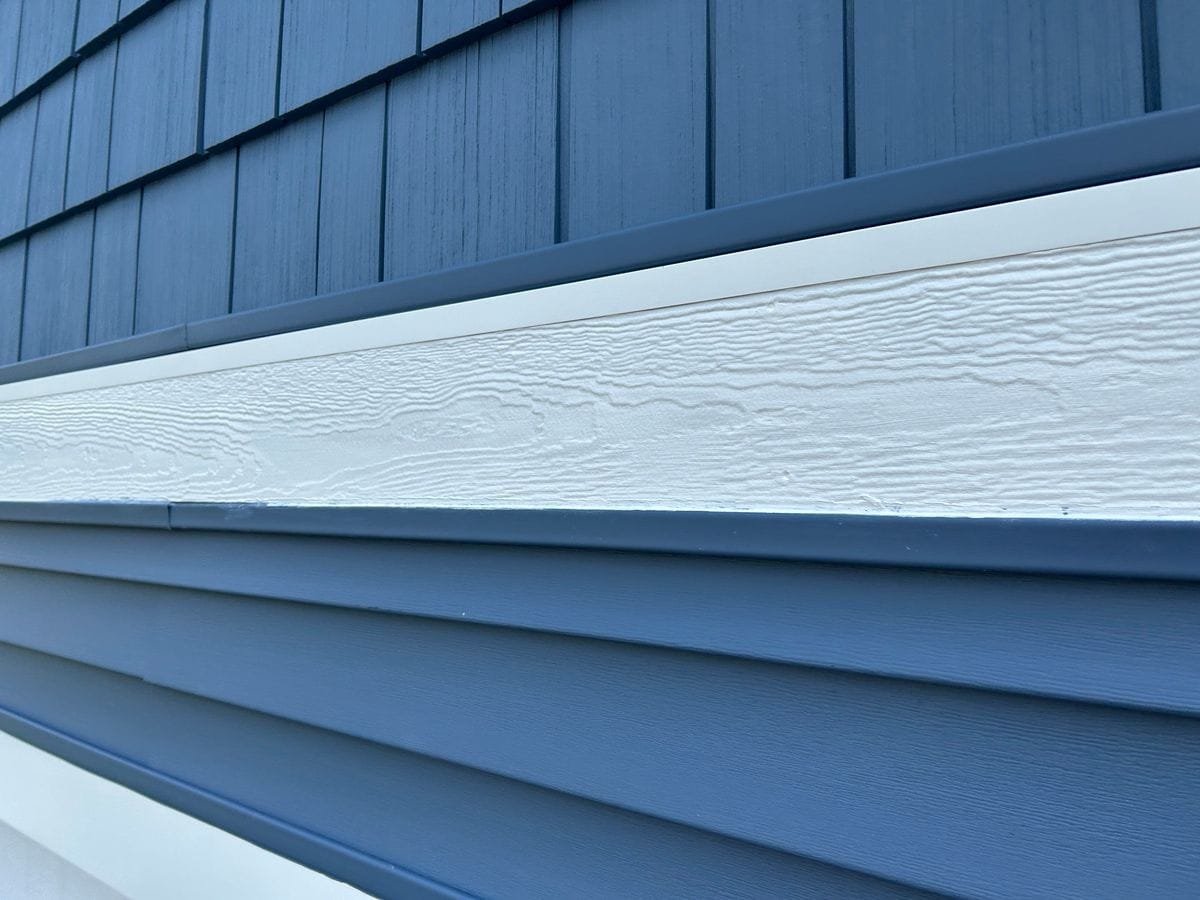
Chromatix dark blue install
Profiles, Colors, and Specs
CraneBoard ships in 4 profiles, 22+ colors, and 50-mil vinyl thickness. Every panel includes integrated Neopor foam insulation.
4 Profiles
Double 7″ (D7)
Traditional horizontal lap, 16-foot lengths. Most-requested profile.
Triple 6″ (T6)
Narrower horizontal lap. For smaller-scale designs or historic homes.
Quad 4.5″ Dutchlap
Classic Dutch lap profile. Traditional farmhouse and colonial aesthetic.
Board & Batten
Vertical style for modern farmhouse designs. Fast install alternative to Hardie/LP B&B.
Panel Thickness: 50 mil
50-mil (~0.050-inch) vinyl thickness is premium for the category. Standard hollow vinyl runs 40 to 44 mil. The extra thickness reduces waviness and flex, and pairs with the rigid foam backing for a panel that feels substantial on the wall.
Most popular in McHenry County: Double 7″ in Pearl or Greystone for traditional homes, Board & Batten in Graphite or Espresso for modern farmhouse remodels. 22+ colors total including darker Chromatix options. See samples at our Crystal Lake showroom.
CraneBoard vs. Standard Vinyl vs. Hardie/LP
CraneBoard occupies a specific tier: above commodity hollow vinyl, below fiber cement/engineered wood. Here’s the honest comparison.
| Feature | CraneBoard This Page | Standard Hollow Vinyl | James Hardie Fiber Cement | LP SmartSide Engineered Wood |
|---|---|---|---|---|
| Material | 50-mil vinyl + Neopor foam (factory-laminated) | ~44-mil hollow vinyl | Fiber cement (Portland cement + sand + cellulose) | Engineered wood (Aspen + SmartGuard) |
| Insulation R-Value | R-2.0+ built in | R-0.0 (none) | R-0.5 | ~0.85 per inch |
| Noise Reduction | Up to 45% | Minimal | Moderate | Moderate |
| Wind Resistance | 160 mph | 120-180 mph varies | 130+ mph (HZ10) | 200+ mph |
| Fire Rating | Combustible (vinyl) | Combustible (melts) | Class A non-combustible | Combustible (treated wood) |
| Dark Colors Available | Yes (Chromatix IR-reflecting) | Limited — warping risk | Yes (ColorPlus) | Yes (ExpertFinish) |
| Lifespan | 20-30 years | 20-30 years | 50+ years | 20-30 years |
| Maintenance | Annual wash, no painting | Annual wash, no painting | Repaint every 15+ years (ColorPlus) | Repaint every 15-20 years (ExpertFinish) |
| IHC Price Tier | Premium vinyl ($14-$16/sqft) | Budget vinyl ($6-$8/sqft) | Premium siding ($16 – $20/sqft) | Premium siding ($16 – $20/sqft) |
| Warranty | Life-of-the-Home Limited (transferable) | Varies | 30-yr non-prorated + 15-yr ColorPlus (paint+labor) | 5/50 prorated |
| IHC Recommendation | Performance vinyl upgrade | Budget-only projects | Default premium choice | Engineered wood alternative |
Why Buy CraneBoard Insulated Vinyl Through IHC
The Honest CraneBoard Conversation
I’ll tell you the truth about where CraneBoard fits. It’s not the siding I default to when a homeowner wants the best. That’s James Hardie. But when a homeowner needs vinyl for budget reasons, for HOA compatibility, or because they want zero exterior maintenance and accept the shorter lifespan, CraneBoard is the premium vinyl I recommend every time. It outperforms commodity hollow vinyl on every axis that matters (R-value, impact, noise, wind, dark color availability), and at $14-$16 per square foot installed it sits right alongside fiber cement like Hardie ($16 – $20) — the difference is CraneBoard’s built-in R-2.0+ insulation, higher impact and wind resistance, and no repainting for the life of the siding.
Our crews install CraneBoard per Westlake Royal’s spec: water-resistive barrier behind the sheathing, specialized 1-1/8-inch J-channels and corner posts (not the 3/4-inch standard vinyl accessories), screws preferred over nails with minimum 3/4-inch penetration into framing, and proper expansion/contraction allowance — never nail tight. Cut panels face-down with a fine-tooth blade to avoid chipping. These details matter; installers who do commodity vinyl without learning CraneBoard’s specifics leave money on the table and warranty coverage gaps.
21+
Years in McHenry County
400+
Google Reviews at 4.6 Stars
A+
BBB Rating
Family
Women-Led, Locally Owned
Notes From the Field — What We Actually Install
I’ve been installing CraneBoard across McHenry County for years. Our most common CraneBoard orders are Double 7-inch in Pearl or Greystone for traditional ranches and colonials, with Chromatix dark colors (Graphite, Espresso, Harbor Blue) increasingly specified on modern remodels. We’ve run CraneBoard on homes in Crystal Lake, Woodstock, Cary, Algonquin, Lake in the Hills, Huntley, and Fox River Grove — it holds up across every McHenry County exposure when installed per spec. Board-and-batten CraneBoard has been growing the last two seasons as a faster, lower-cost alternative to Hardie or LP board-and-batten on homes where budget matters more than the premium aesthetic.
Install specs we don’t compromise on: water-resistive barrier behind the sheathing, always. Specialized 1-1/8-inch J-channels and corner posts (standard vinyl accessories are 3/4-inch and won’t fit the CraneBoard panel profile). Screws with minimum 3/4-inch penetration into framing — we prefer screws over nails on CraneBoard because they hold better with the heavier panel and reduce the risk of fastener back-out. Expansion/contraction allowance — never nail tight, always leave the panel 1/16-inch of movement room per manufacturer spec. Cut panels face-down with a fine-tooth blade to avoid chipping the capstock surface. Our crews run through these details on every project.
When a homeowner is comparing CraneBoard to Hardie or LP, the question is usually budget and maintenance tolerance. CraneBoard saves $2 to $8 per square foot over Hardie. It also lasts 20 to 30 years versus Hardie’s 50-plus. No painting required on CraneBoard; Hardie and LP need repaint every 15 years. For homeowners who plan to sell in under 15 years or prioritize zero exterior maintenance, CraneBoard is a reasonable call. For homeowners who want the premium aesthetic and the 50-year lifespan, we push to Hardie. Both conversations are honest and we’ll tell you which one fits your situation.
Other CraneBoard Products We Install
Premium vinyl and the fiber cement / engineered wood alternatives above it. CraneBoard is the performance vinyl tier — most homeowners who upgrade from CraneBoard go to Hardie or LP SmartSide.
Ready to See CraneBoard’s Performance Vinyl Up Close?
We come to your home, look at the elevations, discuss your goals (budget, aesthetic, energy efficiency, HOA requirements), and walk you through CraneBoard profiles and Chromatix color samples. No pressure, no obligation.
Visit Our Crystal Lake Showroom
4410 IL-176, Suite 1, Crystal Lake, IL 60014
Mon–Fri 9AM–4PM | Appointments available 24/7 via AI receptionist
400+ Google Reviews · 4.6 Stars · Family-Owned Since 2005
Frequently Asked Questions
Is CraneBoard just thicker hollow vinyl?
No. CraneBoard is fundamentally different from hollow vinyl. Every panel ships with a rigid Neopor foam core permanently laminated to the back of the 50-mil vinyl face via factory TXL Lamination. That foam backing gives CraneBoard R-2.0+ insulation value, 45 percent noise reduction, impact resistance (the foam absorbs impact energy instead of the vinyl cracking), and dimensional stability against warping. Hollow vinyl has none of these — it’s just bent sheet plastic with nothing behind it.
What does R-2.0+ actually mean for my house?
R-value is thermal resistance — higher R-value means less heat transfer through the wall. CraneBoard’s R-2.0+ insulation is integrated into the siding layer (in addition to whatever wall cavity insulation you already have). It primarily reduces thermal bridging at the wall studs, which are the weak point in most wall insulation systems. Over a typical McHenry County 2,000-sqft siding job, R-2.0+ translates to measurable heating and cooling bill savings — usually 5 to 10 percent on the envelope portion of energy costs.
Does CraneBoard need painting?
No. The color is built into the vinyl capstock at manufacturing, protected by Chromatix IR-reflecting pigments (which reduce UV fade). Annual washing with soapy water is the only maintenance. No painting, staining, or refinishing required for the life of the siding.
What’s the fire rating?
CraneBoard is combustible — vinyl is combustible, and the Neopor foam backing is also combustible. This is a real trade-off against fiber cement (James Hardie) which is Class A non-combustible. For homes in wildfire-prone areas or municipalities with fire-code restrictions on combustible siding, fiber cement is the better choice. For most McHenry County residential projects, this isn’t a deciding factor.
How does CraneBoard’s warranty compare to Hardie?
CraneBoard carries a Life-of-the-Home Limited Warranty that transfers to the next homeowner. It covers manufacturing defects in material and workmanship. It does NOT cover improper installation, normal wear, or color changes from weathering. Compare to James Hardie’s 30-year non-prorated substrate warranty and 15-year ColorPlus finish warranty (covering both paint AND labor). Hardie’s warranty is stronger on coverage and duration. CraneBoard’s warranty is solid for premium vinyl but doesn’t match fiber cement.
Can CraneBoard be installed in cold weather?
Yes, within limits. CraneBoard can be installed down to temperatures in the 40-degree range with proper technique. Below that, the vinyl becomes more brittle and nail-holes are more likely to crack. For deep-winter installs in McHenry County (below freezing), we generally wait for a warm day or schedule into the shoulder season. Our crews install CraneBoard year-round in Chicago-area weather; we just adapt the technique to the temperature.