If you watched the August 16, 2025 storm roll across Cary, Fox River Grove, and Algonquin (1.5-inch hail, 63 mph winds, every porch light flickering), you already know how fast hail can change the shape of a roof.
What you may not know is how slow the damage is to show up.
Most McHenry County roofs hit by hail look fine from the driveway the next morning. No missing shingles. No obvious holes. The leak comes later. Six months, two years, sometimes longer. By then, the carrier’s notification window has closed and the photos that would have proved the date of loss are gone.
Need expert advice on your project?
21 years in McHenry County · Free estimates · No pressure
This guide is what we hand homeowners after every named-storm event in McHenry and Lake counties. It is what to look for from the ground, what your insurance adjuster will look for on the roof, and what to do in the first seven days.
Quick Answer: How to spot hail damage on your roof
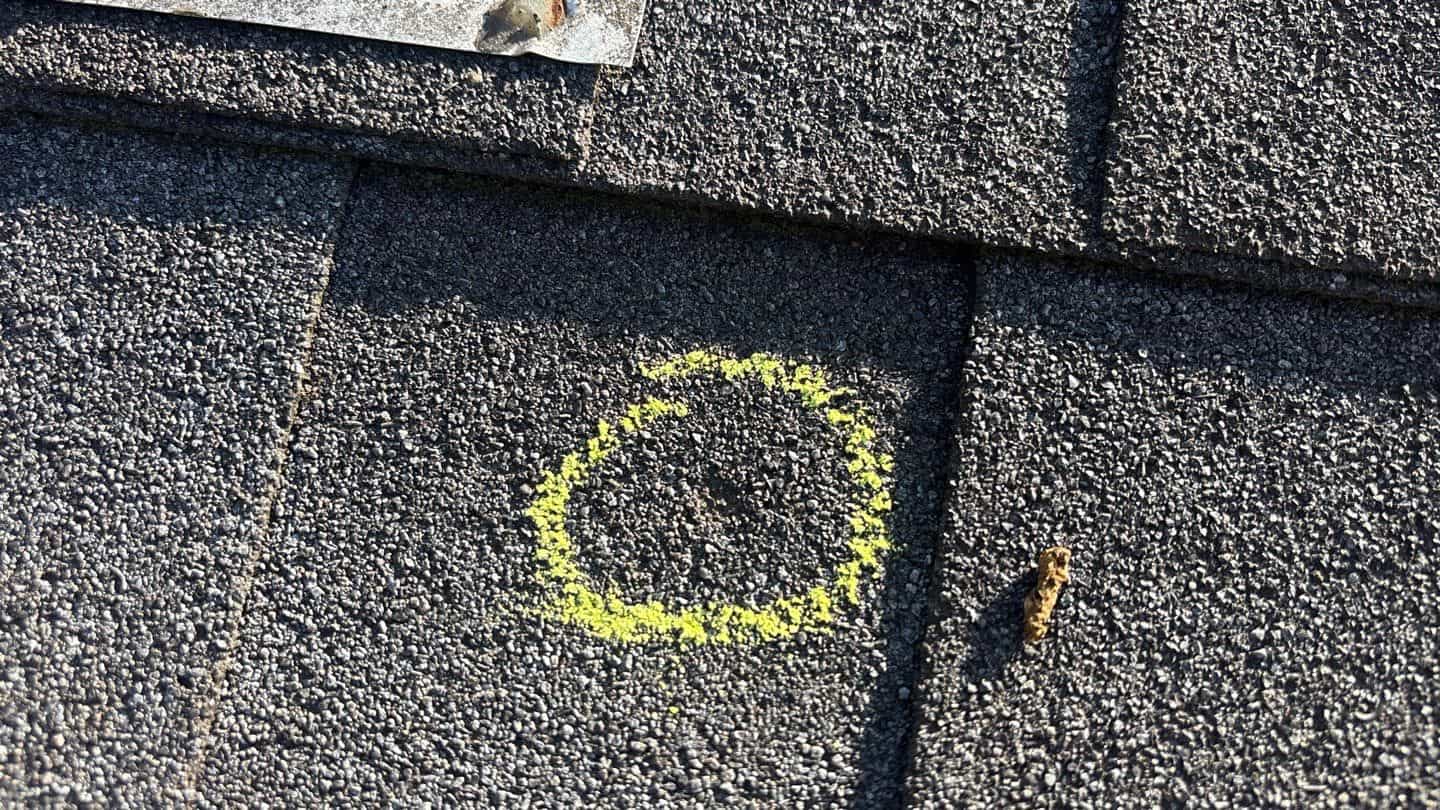
Hail damage on a McHenry County roof shows up as round, dark bruises on shingles, missing granule patches that expose the black asphalt mat underneath, dented metal valleys, and split soft-metal vents. Hailstones 1 inch and larger can cause functional damage on architectural asphalt shingles; hail under 3/4 inch is usually cosmetic only.
The ground-level signs come first. If your gutters, downspout elbows, AC fins, or window screens are dented or split on the storm-facing side of the house, your roof took the same impact at the same time. Schedule a free professional inspection inside the 30 to 60 day notification window most Illinois homeowners policies require.
On this page
- How big does hail have to be to damage a roof?
- 7 ground-level signs you can check without climbing
- What hail damage looks like on different shingles
- Functional vs. cosmetic damage: why this distinction can kill your claim
- What to do in the first 7 days after a hail storm
- How long do you have to file a hail damage claim in Illinois?
- Frequently Asked Questions
How big does hail have to be to damage a roof in McHenry County?
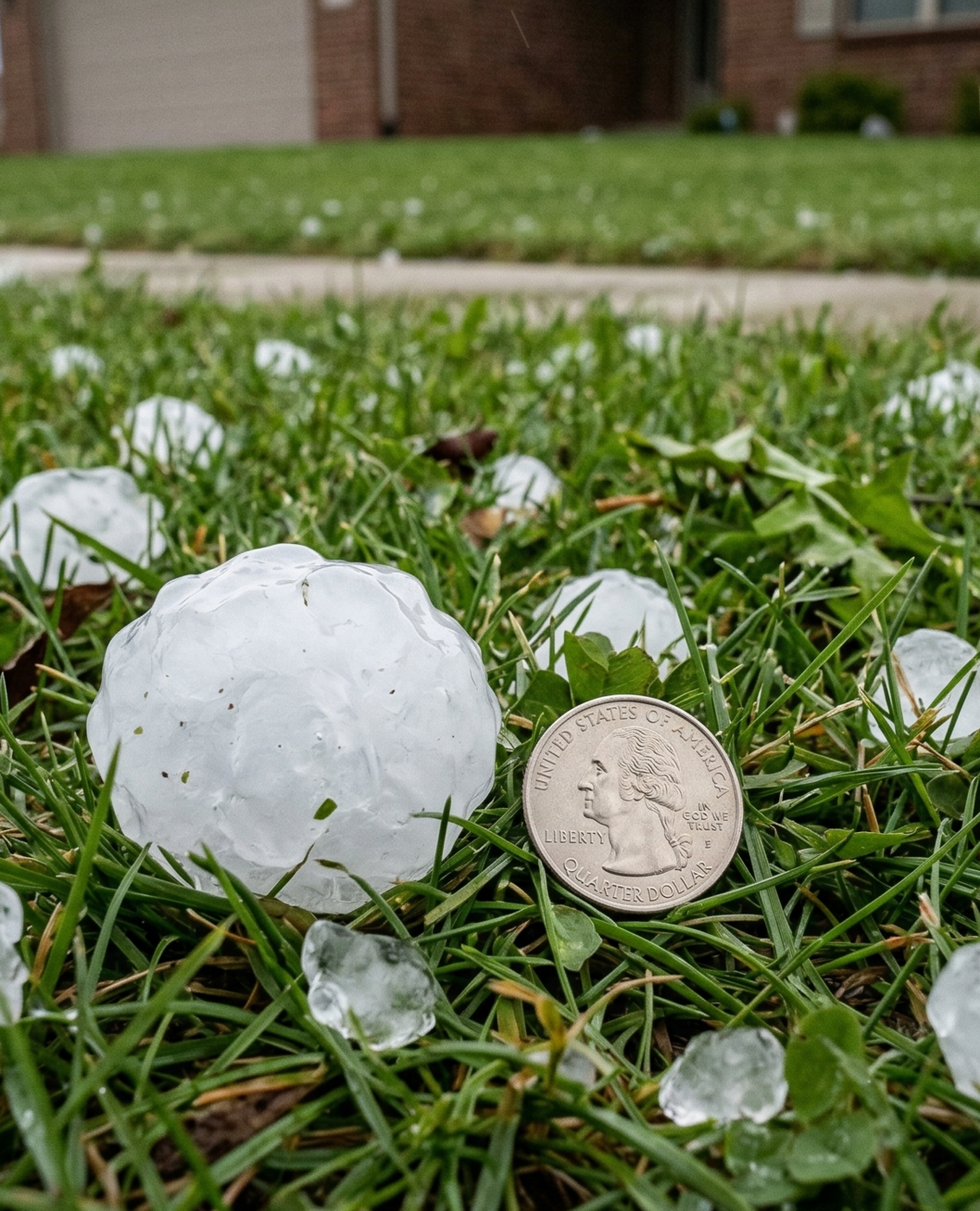
Hail one inch in diameter, the size of a quarter, is the threshold most insurance carriers use to start considering functional damage on a residential asphalt roof. Under 3/4 inch and the damage is usually cosmetic only. At 1.5 inches (ping-pong-ball size, which is what fell on Cary on August 16, 2025), bruising and granule loss on architectural shingles become significant. By 1.75 inches (golf ball), soft-metal vents start to puncture and the call is usually full replacement.
5 Manufacturer Certifications
Ready to get it done right the first time?
Andersen Elite Certified · James Hardie Select · LP SmartSide Pro · GutterShutter Exclusive Dealer
Here is the standard NOAA Storm Prediction Center hail-size convention with the damage threshold for a typical McHenry County asphalt roof:
| Hail Size | Comparable To | Damage Risk to Asphalt Roof |
|---|---|---|
| ¼” – ½” | Pea / marble | Cosmetic only on aged shingles; minor dings on aluminum gutters |
| ¾” | Penny | Borderline. Gutter dents likely, shingle bruising possible on aged roofs |
| 1″ | Quarter | Functional damage threshold. File an inspection |
| 1.5″ | Ping-pong ball | Significant bruising, granule loss, mat fracture likely (Cary 8/16/25 event) |
| 1.75″ | Golf ball | Major damage on most asphalt; soft-metal vents punctured |
| 2.5″ | Tennis ball | Replacement-grade damage on almost all asphalt; cosmetic damage to siding |
| 4″+ | Baseball | Total roof replacement plus siding, window, skylight, and vehicle damage |
A few things that surprise people:
Wind direction matters more than total storm size. The August 16, 2025 storm hit Cary and Fox River Grove harder than Algonquin three miles east because the cell tracked southwest-to-northeast and dropped its hail core on the older neighborhoods between Three Oaks Park and the Fox River.
Age of the shingle matters too. A 17-year-old roof on a 1990s split-level in Lake in the Hills will show bruising at 3/4-inch hail that a brand-new CertainTeed Landmark installed last fall would shrug off. The same storm can total one roof and leave the one across the street fine.
And here is the one that catches every homeowner: the National Weather Service report for your zip code is a snapshot of the strongest measured stone, not the average. A 1.5-inch report for Cary doesn’t mean every Cary roof saw 1.5-inch hail. It means somewhere in the village, someone measured one that big. Your block may have seen 1 inch, or 2 inch, or no hail at all.
That’s why the ground-level check on YOUR house matters more than the regional report.
7 ground-level signs of hail damage you can check without climbing
Do not climb your roof. Insurance adjusters will not credit damage you create stepping on bruised shingles, your homeowners liability does not cover falls from a ladder, and roughly half the hail damage we find isn’t visible from up there anyway. It’s in the granule mat under the surface.
Check these seven from the ground, the deck, or a step stool at gutter height:
- Dented gutters or downspout elbows on the storm-facing side. Soft aluminum tells the truth before shingles do. A dent the size of a marble means hail at least 1/2 inch came through. A dent the size of a thumbnail means 1 inch or larger.
- Dings or paint chips on AC condenser fins on the same side of the house. The fins are aluminum, paper-thin, and exposed. They are the most sensitive hail-event recorder on your property.
- Bruised or stripped paint on the deck rail, fence, or trim. Hail strips paint in round circles, not streaks. Linear scrapes are wind-thrown debris. Round white dots are hail.
- Cracked or split window screens. The soft mesh tears at sub-1-inch hail. If your screens are intact and the AC fins are clean, you probably didn’t take a damaging hit.
- Pock-marks in cedar siding, vinyl, or aluminum at the upper courses. Hail comes down at an angle. The upper third of the wall on the storm-facing side is where you’ll see it first.
- Loose granules in the gutter, downspout splash zone, or driveway. Asphalt shingles shed granules naturally over time, but a sudden pile of black grit at the downspout outlet 24 hours after a hail event is shingle bruising shedding its protective top layer.
- Visibly bent or punctured roof vent caps, plumbing boots, or skylight flashing. Use binoculars from the ground. The soft metal on roof penetrations punctures before shingles fail.
If you see two or more of those signs on the same side of the house, schedule a free professional inspection. Don’t call the carrier first. Call a credentialed McHenry County roofing contractor first, get the inspection in writing, then file the claim with that report in hand. The order matters. More on that in the first-7-days section below.
What hail damage actually looks like on different shingles
Hail leaves a different signature on each shingle type. After 21 years of post-storm inspections across McHenry and Lake counties, here is what we look for on each:
| Shingle Type | What Hail Damage Looks Like | Subtle Tell Most Adjusters Miss |
|---|---|---|
| 3-tab asphalt (older roofs) | Round dark bruises, granule loss in circular patches, exposed black mat | Sealant strip failure. Bruised tabs lift in next wind storm |
| Architectural asphalt (CertainTeed Landmark, etc.) | Bruising visible by running fingers across shingle surface; granule loss less obvious due to laminate | Mat fracture under the laminate, only visible on a test square |
| F-Wave synthetic | Often resists 1-1.5″ hail with no visible mark; impact-rated | Look for displaced underlying paint on metal flashings as the storm proxy |
| Brava composite (cedar shake / slate look) | Class 4 impact rating; visible damage usually requires 2″+ hail | Check the soft-metal vents and gutters first; those tell the story before Brava does |
| Real cedar shake | Splitting along grain, raised fibers, cracked butts | Insurance often won’t cover cosmetic splitting; the functional question is wind uplift after impact |
A note on the CertainTeed shingles we install: customers comment on how thick and heavy the Landmark feels in hand compared to entry-tier asphalt. That weight is real. Heavier shingles distribute hail impact across more substrate before bruising. It’s part of why we install the CertainTeed Integrity Roof System as our default architectural option. Installing every component as CertainTeed (underlayment, starter, shingle, vent, ridge) unlocks SureStart PLUS warranty coverage of up to 50 years, 100% material and labor, transferable when you sell the home.
That said: no shingle is hail-proof. We have replaced Landmark roofs after 2-inch hail events. The difference is how often, and how clean the warranty path is when it happens.
Functional vs. cosmetic damage: why this distinction can kill your claim
Functional damage shortens the life of the shingle and compromises waterproofing. Cosmetic damage is visible but does not affect performance. Insurance carriers cover functional damage. Most carrier policies exclude or limit cosmetic damage. This single distinction is where the majority of denied hail claims live.
The industry-standard inspection method is the test square: the adjuster (or the contractor’s inspector) marks off a 10-foot-by-10-foot section on each slope of the roof and counts the impact marks inside that square. Carriers vary on the threshold. Some look for 5 hits per square as the functional damage line, others want 8 or 10. The threshold isn’t the law; it’s a carrier-by-carrier interpretation derived from Haag Engineering and IAARSI inspection methodology.
The other moving piece: not every dimple is damage. An adjuster can flag a hit as a brush mark from a fallen branch (not credited), a manufacturing blemish (not credited), or a foot scuff from a previous contractor (not credited). The honest, credentialed inspector marks each impact as definite-hail, probable-hail, or non-hail, and the dispute usually happens in the probable column.
This is the part we have to disclose: Innovative Home Concepts has a sister company called IHC Public Adjusters, a separately licensed Illinois public adjusting firm. When a roof claim gets denied or short-paid, our public adjuster team can re-walk the roof and negotiate with the carrier on the homeowner’s behalf. The relationship is disclosed per 215 ILCS 5/1575.
You are not required to use a public adjuster. Many homeowners successfully appeal denials on their own with photos, a second inspection report, and the carrier’s own test-square documentation. The honest version is this: after 21 years working with carriers on hail and wind claims, more than half of the denied claims we have re-walked had at least some recoverable damage missed in the original inspection.
If the carrier says no, you have options. Don’t accept the first answer if the ground-level signs are there.
What to do in the first 7 days after a hail storm
The first week after a hail event in McHenry County is the most important week for any future insurance claim on that storm. Here is the order to do things:
- Document everything within 24 hours. Date-stamped photos of every dent, every cracked screen, every granule pile in the downspout splash zone. Time-stamped video of the damage walk-around. Save the regional NWS hail report PDF for the date. It lives on the National Weather Service Chicago page for about 30 days before archiving.
- Do the 7-point ground-level check from the section above. If two or more boxes hit, you have enough evidence to justify a professional inspection.
- Call a credentialed roofing contractor for a free inspection before you call the carrier. This is the part most homeowners get backwards. The carrier will send an adjuster. The adjuster has 30 minutes per house and is looking for reasons to short-pay. A contractor inspection that comes BEFORE the adjuster shows up gives you a written report to anchor the conversation. We do this inspection free across McHenry and Lake counties.
- File the claim with date of loss and your contractor’s inspection report in hand. Have your policy number, the date of the storm, and a one-paragraph description of the damage ready. Reference the NWS event if it was a named storm event (e.g., “1.5-inch hail and 63 mph winds confirmed by NWS Chicago for August 16, 2025”).
- Be present at the adjuster meeting. Walk the roof with the adjuster (or have your contractor walk it on your behalf). Take notes on what they mark and don’t mark. If your contractor finds damage the adjuster misses, raise it on the spot. Supplemental claims are easier when the disagreement is documented from day one.
- Get the scope of loss in writing before any repair work starts. This is the carrier’s commitment to pay. It should itemize every component of the repair: shingles, underlayment, vent boots, drip edge, ice-and-water shield, flashing, ridge cap. If a line item is missing, push for a supplement before the work begins.
- Don’t sign an AOB (Assignment of Benefits) you don’t understand. Some storm-chaser contractors lead with an AOB on day one. That signs your claim payment over to the contractor. Read it. If you don’t recognize the company, the workmanship warranty, or the home office address, slow down.
The compressed timeline matters because Illinois homeowners insurance policies typically require notification of a loss within 30 to 60 days. Wait longer than that and the carrier can deny on procedural grounds even if the damage is real. The Illinois statute of limitations on property claims is generally one year from date of loss, but the contractual notification clause inside your policy is the deadline that usually controls.
If you need a free inspection in McHenry or Lake County, Schedule Your Free McHenry County Hail Damage Inspection or Call or Text (815) 356-9020. We respond same-day to storm-window calls during severe weather season.
How long do you have to file a hail damage claim in Illinois?
Illinois law generally allows up to one year from the date of loss to file a property damage claim under a homeowners policy. The exact contractual deadline lives in your specific policy. Most carriers require prompt notification within 30 to 90 days even though the statute gives you longer. Read your policy declarations page. If the storm hit and you haven’t filed yet, file now rather than waiting for visible failure.
Practical version: if your roof took a hit in the May–July 2026 severe weather season and you’re reading this in August or September thinking “I’ll get to it,” get to it this week. The notification clock is usually 30 to 60 days, not 365. We have walked too many roofs where the homeowner had real damage, real photos, and a real claim, and lost it to the contractual notification window.
If you missed the window already, don’t assume you’re out of options. Carriers sometimes accept late notifications when the damage was genuinely latent (the leak didn’t show up until later). The Illinois Department of Insurance handles bad-faith denial complaints. And in some cases, hiring a public adjuster re-opens conversations the carrier closed.
Frequently Asked Questions
How can you tell if your roof has hail damage?
The fastest non-roof check is your gutters, downspouts, AC condenser fins, and window screens on the storm-facing side of the house. Hail dents soft aluminum and tears fine mesh before it visibly damages shingles. If those are clean, your roof probably didn’t take a damaging hit. If they’re dented and split, schedule a professional roof inspection. About half of hail damage on shingles isn’t visible from the ground.
What does hail damage look like on a roof?
On asphalt shingles, hail damage shows up as round dark bruises, granule loss in circular patches that expose the black asphalt mat underneath, and dented metal in the valleys and around vent pipes. On architectural laminate shingles like CertainTeed Landmark, the bruising can be felt by running a hand across the shingle even when it’s not visible to the eye. Soft-metal roof penetrations (vent caps, plumbing boots) puncture before shingles fail at 1.75-inch hail and above.
How big does hail have to be to damage a roof?
Hail at least one inch in diameter (quarter size) is the threshold most insurance carriers use to start considering functional damage on residential asphalt roofs. Hail under 3/4 inch (penny size or smaller) is usually cosmetic. At 1.5 inches (ping-pong ball, the size that fell in Cary on August 16, 2025), significant bruising and granule loss are likely on architectural shingles.
Can hail damage a roof and not leak right away?
Yes, and this is the trap most homeowners fall into. Bruised shingles lose their protective granules, which exposes the asphalt mat to UV degradation. The mat dries out and cracks over months or years, and the leak shows up long after the storm. By then the carrier’s notification window has closed. The honest version: file the claim within 30 to 60 days of the storm even if you don’t see a leak yet, because the damage clock is already running.
How long do you have to claim hail damage on a roof in Illinois?
Illinois statute generally allows up to one year from the date of loss for a property damage claim, but most homeowners insurance policies contain a contractual notification clause requiring prompt notice within 30 to 90 days. The contractual deadline usually controls. Read your policy, document the damage with date-stamped photos within 24 hours, and file the claim inside the carrier’s notification window, not the one-year statute.
Do all hail storms cause roof damage?
No. Hail under 3/4 inch in diameter rarely causes functional damage to a roof in sound condition. Even storms with larger hail can leave one block damaged and the next block untouched, because hail cores are narrow and wind direction concentrates impacts on the storm-facing side. The National Weather Service report is a regional snapshot of the largest measured stone, not what fell on every house in the zip code. The only reliable answer is a ground-level check on your specific property within a week of the storm.
What to do next
If you read this far, you probably watched a storm cell move across McHenry or Lake County in the last few weeks and you’re wondering whether your roof took a hit. The seven-point ground-level check is the quickest way to know without climbing.
If two or more of those signs are on your house, Schedule Your Free McHenry County Hail Damage Inspection or Call or Text (815) 356-9020. We send a credentialed inspector with a written report inside 72 hours during storm-response weeks. The inspection is free whether you file a claim or not.
If you’ve already filed and the carrier denied or short-paid, our sister company IHC Public Adjusters can re-walk the roof. Same number to start that conversation.
The right time to look is now. The clock on the carrier’s notification window started the day the hail fell.
About the Author
Rhett Wilborn is President & Founder of Innovative Home Concepts, a Crystal Lake, IL exterior remodeler serving McHenry and Lake counties since 2005. IHC holds Illinois Roofing Contractor License #104.015093 and is McHenry County’s only contractor holding all five manufacturer certifications: James Hardie Select Contractor, Andersen Elite Certified Contractor, CertainTeed ShingleMaster, LP SmartSide Pro, and exclusive GutterShutter dealer for McHenry and Lake counties.
Innovative Home Concepts has a sister company, IHC Public Adjusters, a separately licensed Illinois public adjusting firm. Financial relationship disclosed per 215 ILCS 5/1575.