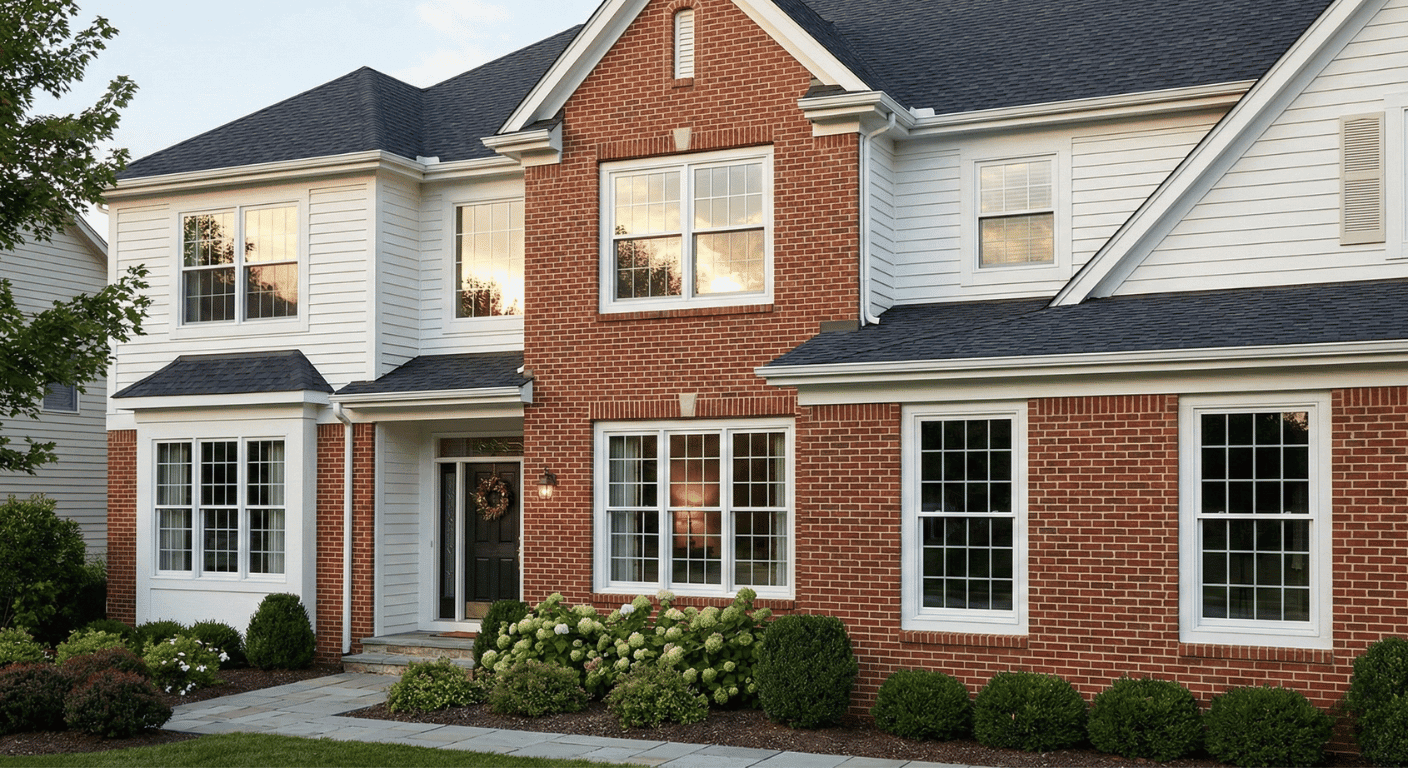
Window & Door Replacement in Crystal Lake, IL
The only elite Andersen window contractor in McHenry County. Three product tiers for every budget — Andersen, InnoMAXX, and Midway — plus ProVia and Albany entry doors.
300+ five-star reviews • 21 years in McHenry County • Women-led • Free estimates

Andersen Elite Contractor
300+ Five-Star Reviews
21 Years in McHenry County
A+ BBB Rating
Licensed, Bonded & Insured
The Only Elite Andersen Window Contractor in McHenry County
If you live in a Crystal Lake home built before 1980, there’s a good chance you’re still looking through single-pane glass. Those windows were fine when gas was 65 cents a gallon. They are not fine now. Single-pane windows in McHenry County lose up to 30% of your heating energy every winter and let condensation build up between the glass and the frame until the wood rots from the inside out. Fox River valley humidity makes it worse. The homes in Coventry, Crystal Lake Estates, and the older sections of Four Colonies are the ones we see most often — 1960s and 1970s builds with original windows that have long since failed.
IHC carries three window product tiers so you’re not boxed into one price point. Andersen is our premium line — we are the only elite Andersen contractor in the county, which gets you priority pricing and the full Andersen warranty that non-certified installers cannot offer. InnoMAXX Windows is our branded mid-range system: a commercial-grade vinyl frame paired with our own extended installation warranty that covers labor for the life of the window. Midway Windows is budget-friendly vinyl that still meets Energy Star standards — solid protection without the premium price tag.
We also install doors. Entry doors, sliding patio doors, French doors, and storm doors from two trusted brands: ProVia (Amish-crafted in Ohio) and Albany Door Company (custom-built in Bedford Park, IL — 60 miles from Crystal Lake). Both brands handle McHenry County’s 100-degree annual temperature swing without warping, sticking, or cracking.

Five-Star Reviews
Three Window Tiers for Every Budget
Every home in McHenry County has a different age, a different budget, and different exposure. Here are the three window systems we install — and the honest differences between them.
Andersen Windows (Premium)
The best-known name in windows for a reason. Andersen offers Fibrex composite, wood-clad, and 100 Series options with Low-E glass and argon fill standard. Their warranty is among the strongest in the industry — but only when installed by a certified contractor. Non-certified installers get a limited version.
IHC is the only elite Andersen contractor in McHenry County. That gives you priority scheduling, full warranty coverage, and pricing that general contractors cannot match.
✓ IHC is Andersen Elite Certified
Andersen window details →
InnoMAXX Windows (Mid-Range)
InnoMAXX is IHC’s own branded window system. We pair a commercial-grade vinyl frame with Low-E glass, argon gas fill, and insulated spacer bars — then back it with our extended installation warranty. The frame itself carries a lifetime limited warranty from the manufacturer. Our labor warranty covers you for 50 years.
This is the sweet spot for most McHenry County homeowners: Energy Star-rated performance without the Andersen price tag. We install more InnoMAXX units than any other product.
✓ Extended IHC Labor Warranty
InnoMAXX window details →

Midway Windows (Budget-Friendly)
Midway vinyl windows meet Energy Star requirements at the lowest price point we carry. Double-pane insulated glass with Low-E coating keeps heating costs down without blowing through your renovation budget.
These are the windows we recommend for rental properties, investment homes, or homeowners who need to replace every window in the house on a tight timeline. They do the job. No apology needed.
✓ Energy Star Certified
Entry Doors, Patio Doors & Storm Doors
A beautiful set of windows next to a dented, weather-stripped entry door doesn’t make sense. We handle doors too — same crew, same project, same warranty coverage.
ProVia Entry & Storm Doors
Amish-crafted in Sugarcreek, Ohio. ProVia’s fiberglass Signet and Embarq entry doors feature the most realistic woodgrain textures in the industry. Steel entry doors for maximum security. Deluxe and Spectrum storm doors with retractable screens. Lifetime transferable warranty.
- Fiberglass entry doors — AccuGrain wood-grain texture, Energy Star rated
- Steel entry doors — 20-gauge galvanized, highest security rating
- Storm doors — full-view glass, retractable screens, heavy-duty aluminum
✓ Amish-Crafted Quality
ProVia door details →
Albany Custom Entry Doors
Manufactured in Bedford Park, Illinois — 60 miles from Crystal Lake. Albany builds steel and fiberglass entry doors to your exact specifications: custom sizes, custom colors, and configurations that national brands don’t offer. R-15.2 insulation (Albany Industries) — one of the highest in the industry.
- Custom sizing — built to your exact rough opening, no reframing
- Factory pre-finishing — any color or stain, applied in controlled conditions
- Sidelights & transoms — integrated units built to match exactly
✓ Made in Illinois
Albany door details →
Doors get replaced less often than windows, but they fail the same way: seal degradation, frame expansion, and hardware wear. If daylight shows around your closed front door, you are heating the outside. That gap also lets moisture in — and in Crystal Lake’s 35+ inches of annual snowfall, moisture at the threshold turns into ice, rot, and mold. We also install Andersen patio doors (sliding and French styles) alongside window projects.
Andersen vs. InnoMAXX vs. Midway: Window Products Compared
Pricing reflects 2024–2025 Chicago-market averages for a full-house replacement (10–15 windows). Every product below includes professional installation by IHC.
| Feature | Andersen (Premium) | InnoMAXX (Mid-Range) | Midway (Budget) |
|---|---|---|---|
| Price Range (full house) | $18,000 – $30,000+ | $12,000 – $22,000 | $8,000 – $15,000 |
| Frame Material | Fibrex composite / Wood-clad | Commercial-grade vinyl | Standard vinyl |
| Glass Package | ★ Low-E4 + argon + warm-edge spacer | Low-E + argon + insulated spacer | Low-E + argon |
| Energy Rating | ✓ Energy Star Most Efficient | ✓ Energy Star Certified | ✓ Energy Star Certified |
| Product Warranty | ★ 20-year limited (full via certified install) | Lifetime limited frame + glass | Lifetime limited |
| IHC Labor Warranty | Per Andersen Elite terms | ★ 50-year extended labor | Standard installation warranty |
| Frame Colors | 20+ exterior / interior combos | 8–12 standard colors | 6–8 standard colors |
| Best For | Premium homes, max resale, brand-conscious buyers | Best value — most McHenry County homeowners | Rental properties, tight budgets, full-house on a timeline |
| IHC Certification | ✓ Only Elite contractor in McHenry County | ✓ IHC proprietary system | — |
Why McHenry County Homeowners Call Us for Windows
Only Andersen Elite Contractor in the County
Andersen doesn’t certify every installer who asks. They audit installation practices, customer reviews, and volume before granting elite status. We earned it. That means you get full Andersen warranty coverage, access to the full product line, and better pricing than a general contractor can offer.
InnoMAXX: Our Own Mid-Range System
Not everyone needs an Andersen window. InnoMAXX pairs a commercial-grade vinyl frame with premium glass packages and IHC’s 50-year extended labor warranty. It’s the product we designed for McHenry County homeowners who want real performance without the flagship price tag.
Energy Savings That Show Up on Your Bill
Low-E glass, argon gas fill, insulated frames, warm-edge spacer bars. These are not marketing terms. They reduce heat transfer through your windows by up to 30%. Homes along the Crystal Lake waterfront and in the Fox River valley get hit hardest by temperature swings — new windows make the biggest difference there.
21 Years With McHenry County Weather
We know that homes in Country Club Estates have smaller window openings than the colonials in Coventry. We know that west-facing windows on Route 14 get blasted by afternoon sun and storm-driven rain. We’ve been fitting windows to this county’s homes since 2005. That experience eliminates surprises on install day.
Doors Included — One Crew, One Project
Entry doors, patio doors, storm doors. We handle them alongside your window replacement so you’re not coordinating two contractors, two schedules, and two warranty structures. One project. One invoice. One crew that knows how the pieces fit together.
Financing Available
A full-house window replacement runs $8,000 to $30,000+ depending on product and home size. That’s a real number. We offer financing so you can upgrade now and pay over time — because every winter you wait is another season of energy loss and potential moisture damage.
Get a Free Window & Door Estimate
We measure, quote, and explain every option in your own home. No showroom visit needed. Most estimates scheduled within a week.
Women-led • A+ BBB • Best of Fox since 2011 • Financing available • Free estimates, no obligation
Our Window & Door Replacement Process
From first call to final walkthrough — here’s how a window project with IHC works.
In-Home Assessment
We come to your home, inspect every window and door opening, check for moisture damage around frames, and measure each unit. We bring product samples so you can compare Andersen, InnoMAXX, and Midway side by side in your own lighting.
Detailed Written Quote
You receive an itemized estimate: window specs, door specs, labor, trim work, disposal, and timeline. Each product tier is quoted separately so you can compare options and make the call that fits your budget.
Professional Installation
Our crew removes old windows, inspects the rough openings for rot or water damage, repairs framing as needed, and installs your new windows according to manufacturer specifications. Most full-house window projects take 1–2 days. Doors are typically installed the same day they arrive.
Final Walkthrough
We open and close every window and door with you. We check locks, screens, and seals. We verify the caulk lines and trim. If anything isn’t right, we fix it on the spot. Then we clean up and get out of your way.
Window Installation by IHC

Rhett Wilborn on site consulting with window installers
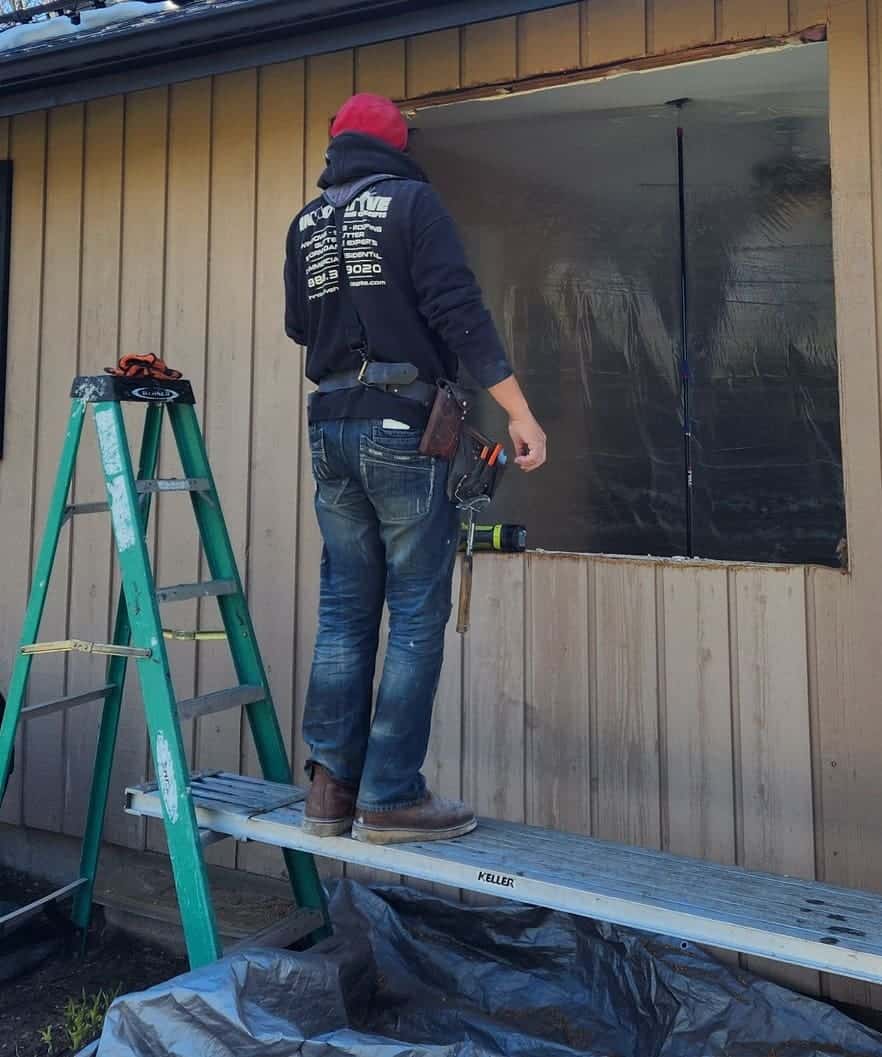
IHC installer in branded sweatshirt installing a new window

New vinyl window with precision aluminum trim work
Innovative Home Concepts is the only Andersen Elite Certified Contractor in McHenry County, IL. Window replacement in the Crystal Lake area costs $600 to $2,500+ per window depending on brand and series — vinyl replacement windows at $600–$800, InnoMAXX at $800–$1,000, and Andersen at $700–$2,500+. IHC also installs ProVia and Albany entry doors and Andersen patio doors.
Window & Door Replacement FAQs
How much does window replacement cost in Crystal Lake, IL?
Full-house window replacement in the Crystal Lake area typically runs $8,000 to $30,000+ depending on the product tier and number of windows. Midway vinyl starts around $8,000 for a standard home, InnoMAXX mid-range runs $12,000 to $22,000, and Andersen premium starts around $18,000. IHC provides free in-home estimates with itemized pricing for all three tiers.
What are the best replacement windows for Illinois weather?
The best windows for Illinois need Low-E glass, argon gas fill, and insulated frames to handle the state’s 100-degree annual temperature range. Andersen’s Fibrex composite and Low-E4 glass package is engineered for northern climates. InnoMAXX and Midway vinyl windows also meet Energy Star standards for the Illinois climate zone.
What is the difference between Andersen windows and vinyl windows?
Andersen windows use Fibrex composite or wood-clad frames that are stronger and more dimensionally stable than standard vinyl. They offer more color options, better energy ratings, and a stronger warranty when installed by a certified contractor. Vinyl windows cost less upfront but have fewer customization options and a shorter lifespan. Both types block drafts and reduce energy bills compared to single-pane glass.
How long does window installation take?
Most full-house window replacements (10–15 windows) take 1–2 days with a professional crew. Individual window replacements can be done in under an hour each. Door installations typically take 2–4 hours per unit. Your home stays secure and weather-tight throughout the process — we remove and install one opening at a time.
How much energy can new windows save?
Replacing single-pane windows with Energy Star-rated units can reduce heating and cooling costs by up to 30%, according to the U.S. Department of Energy. In McHenry County, where winter temperatures drop to 15°F and summers reach the upper 80s, the savings add up quickly. Low-E coatings, argon gas fill, and insulated frames all contribute to thermal performance.
Does IHC install entry doors and patio doors?
Yes. IHC installs fiberglass entry doors, steel entry doors, sliding patio doors, French patio doors, and storm doors from ProVia (Amish-crafted in Ohio) and Albany Door Company (custom-built in Bedford Park, IL). We also install Andersen patio doors. Most homeowners combine door and window replacement into a single project to save on labor costs and seal the entire building envelope in one pass.
Do new windows qualify for a federal tax credit?
Yes. Under the Inflation Reduction Act (Section 25C), homeowners can claim a tax credit of up to $600 per year for Energy Star-certified windows and skylights, and up to $500 for exterior doors (limit 2 doors at $250 each). The windows must meet Energy Star Most Efficient criteria. This credit is available through 2032 and applies to the product cost only, not installation labor.
Explore Our Window & Door Services
Ready to Replace Your Windows or Doors?
Call or text us for a free in-home estimate. We bring product samples, measure every opening, and give you a written quote with all three product tiers — no pressure, no obligation.
We respond within 1 business day • No spam • No obligation • Financing available
Innovative Home Concepts, Inc.
4410 IL-176, Ste 1
Crystal Lake, IL 60014
Phone: (815) 356-9020
Email: info@innovativehomeconcepts.com
Monday–Friday: 9:00 AM – 4:00 PM
Andersen Elite Contractor
Readers Choice Award 2025 (Windows & Doors)
A+ BBB Rating
Best of Fox — Winner since 2011
Women-Led & Community Rooted