A bad storm just rolled through McHenry County. Maybe hail the size of quarters. Maybe straight-line winds that peeled shingles off the ridge. Maybe both.
Right now your phone is blowing up with door-knockers offering “free roofs” and your insurance company’s hold music is stuck in your head. Take a breath. This guide walks you through exactly what to do — hour by hour, step by step — so you don’t leave money on the table or end up with a nightmare contractor.
We’ve helped thousands of McHenry County families through this process since 2005. Here’s everything we’ve learned.
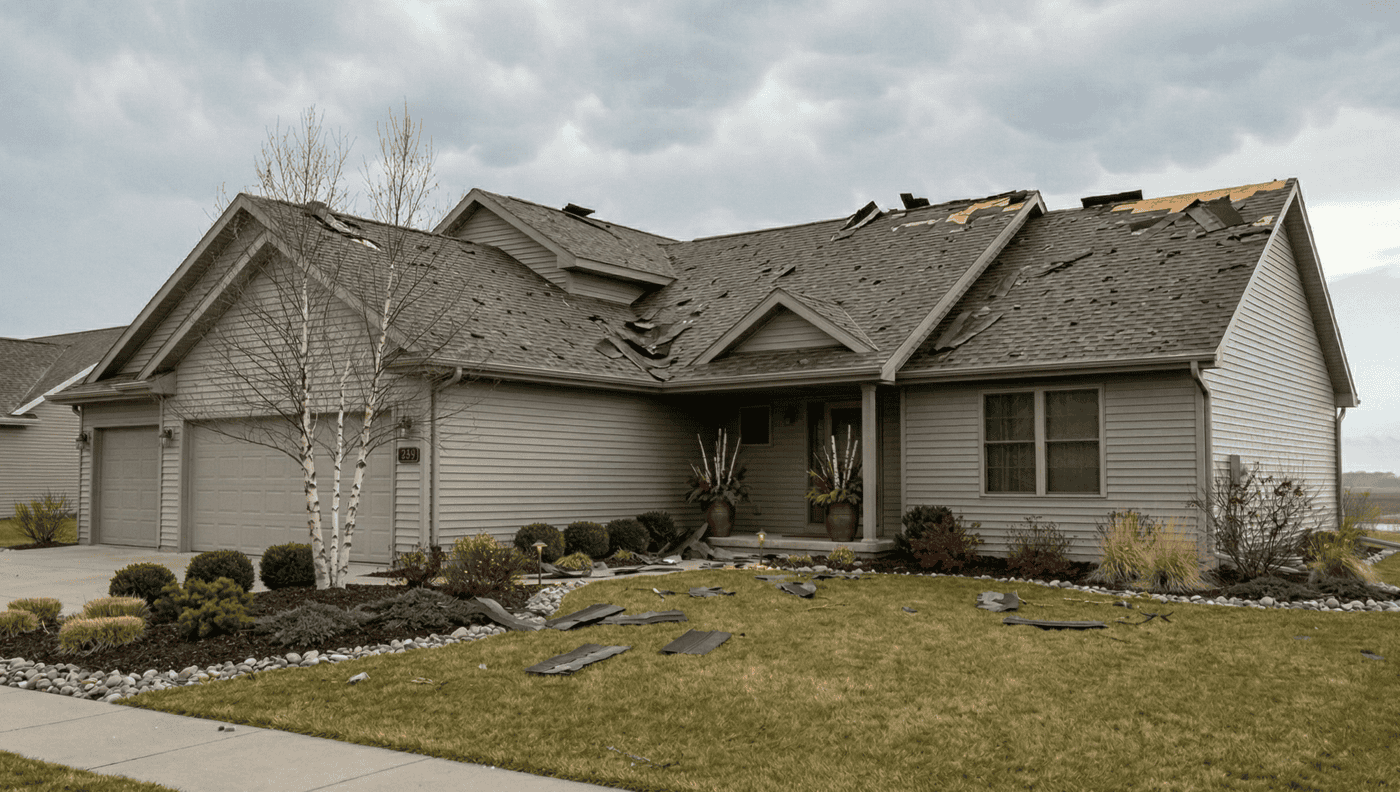
The First 2 Hours: Safety & Documentation
Before you call anyone — your insurance company, a contractor, your neighbor — do these things first. The documentation you collect right now is the foundation of your entire claim.
Immediate Safety (First 30 Minutes)
- ☐ Stay inside until the storm fully passes — secondary cells are common in northern Illinois
- ☐ Check for downed power lines near your home. If you see one, call ComEd at 1-800-334-7661. Do not approach.
- ☐ If you smell natural gas, leave immediately and call Nicor Gas at 888-642-6748 from outside
- ☐ Check for water intrusion in the attic, around windows, and in the basement
- ☐ If a tree hit your home, do NOT enter rooms beneath the impact point
Document Everything (30 Minutes to 2 Hours)
- ☐ Walk the perimeter of your home and photograph every side — wide shots first, then close-ups of damage
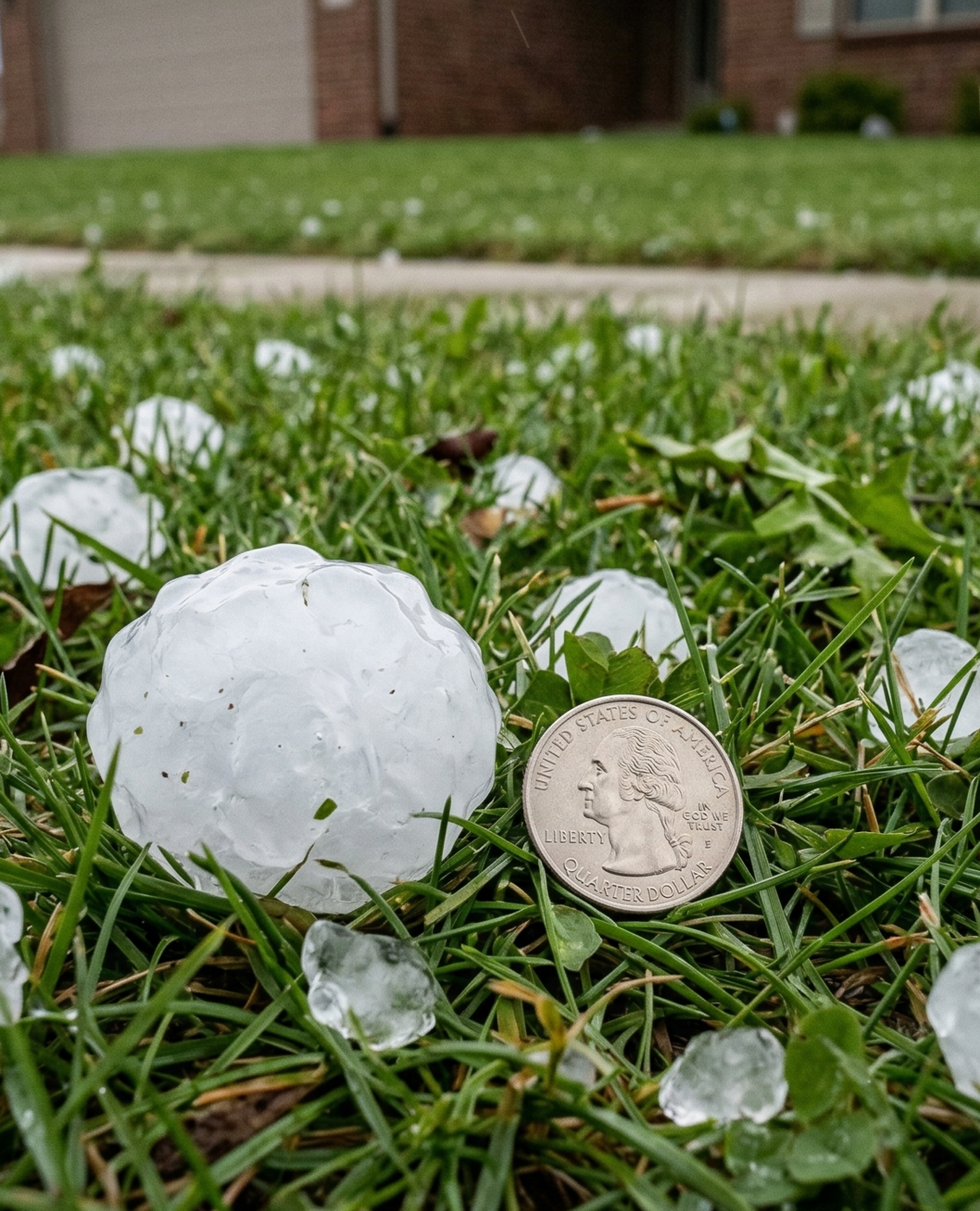
- ☐ Photograph any hail still on the ground next to a coin, ruler, or credit card for scale
- ☐ Take photos of your gutters, downspouts, and any debris in the yard
- ☐ Photograph window screens, siding, and trim from close range — look for dents, cracks, and chips
- ☐ If it’s safe, photograph your roof from the ground using a phone zoom — do NOT climb on the roof
- ☐ Check outdoor AC units, garage doors, and fences — these count in your claim
- ☐ Save screenshots of the weather radar and any hail reports from that day
- ☐ Write down the date, time, and what you heard/saw during the storm while it’s fresh
Pro Tip: Hail Melts Fast
In an Illinois summer, hail can melt within 20 minutes of the storm passing. If you see hail on the ground, photograph it immediately with something for size reference. That photo can be worth thousands of dollars to your claim. Even a photo of hail sitting in your gutter or on your car hood works.
Within 24 Hours: File Your Claim & Get a Real Inspection
Call Your Insurance Company
File your claim as soon as possible — don’t wait to “see how bad it is.” Illinois law doesn’t set a hard deadline, but most policies require “prompt” notice. Waiting weeks gives your carrier a reason to question whether the damage was from this storm or something older.
When you call, have this ready:
- ☐ Your policy number
- ☐ Date and approximate time of the storm
- ☐ Brief description of visible damage (don’t downplay it, but don’t guess either)
- ☐ Your contact info and preferred inspection times
Illinois Insurance Basics You Need to Know
ACV vs. RCV: If you have an Actual Cash Value (ACV) policy, your payout is reduced by depreciation — meaning an older roof gets a smaller check. A Replacement Cost Value (RCV) policy pays what it actually costs to replace, minus your deductible. Check your declarations page or call your agent to find out which you have.
Wind/Hail Deductibles: Many Illinois carriers now use a percentage-based wind/hail deductible instead of a flat dollar amount. A 1% deductible on a $350,000 home means you’re paying $3,500 out of pocket before insurance kicks in. A 2% deductible means $7,000. This is separate from your standard deductible. Check your policy — this surprises a lot of homeowners.
Filing Deadline: While Illinois doesn’t set a statutory claims deadline, your policy likely requires notice within 60–180 days. File early. Waiting only hurts you.
Get a Professional Roof Inspection
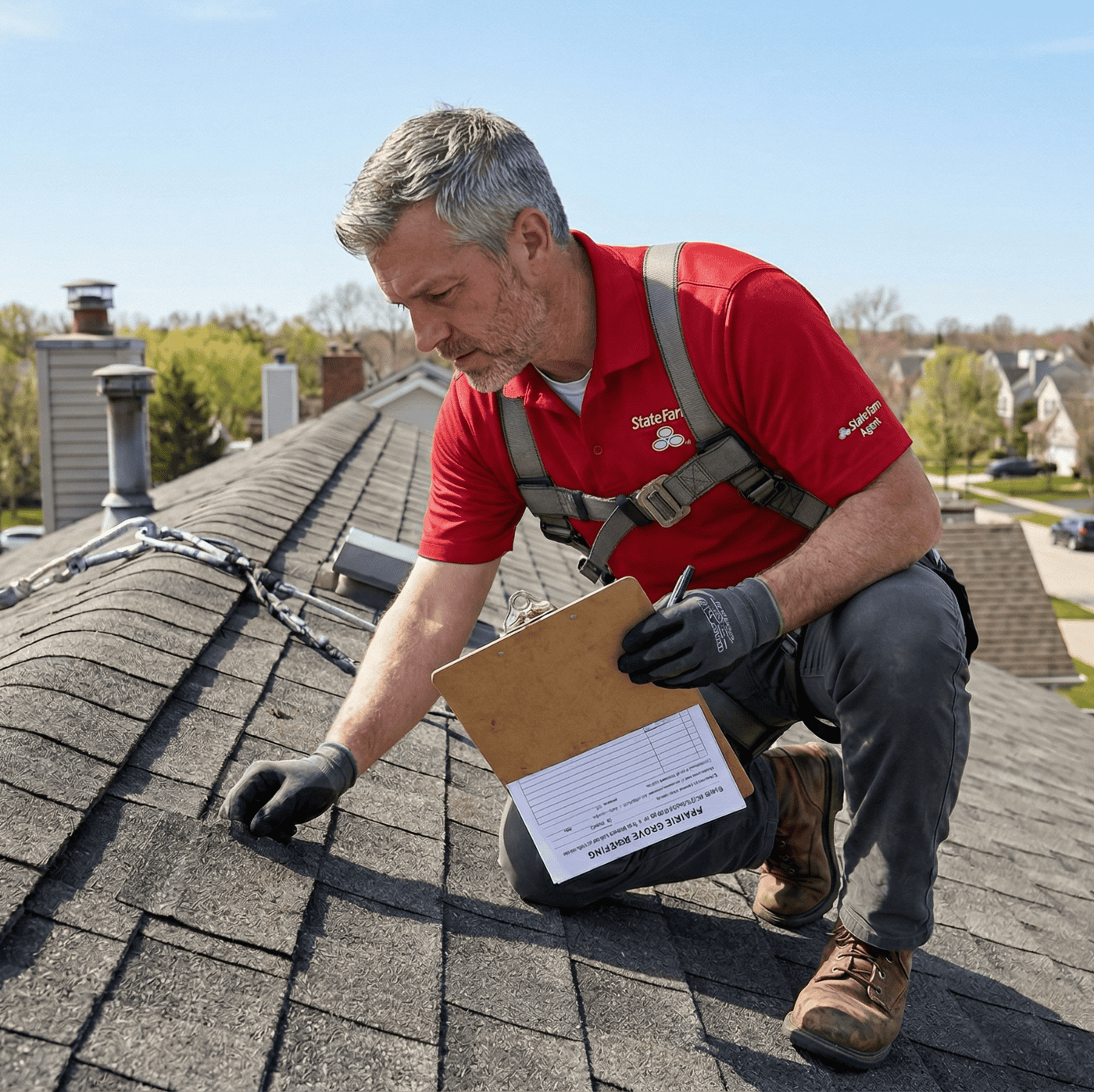
Call a local, established contractor to inspect your roof before the insurance adjuster arrives. This is important for three reasons:
- You’ll know the full scope of damage before the adjuster shows up. Adjusters are not roofers — they can miss things.
- A documented inspection report gives you leverage if the adjuster’s estimate comes in low.
- Temporary repairs (tarps, board-ups) can prevent further damage — and your insurance company expects you to mitigate. Save every receipt.
Do NOT Sign an “Assignment of Benefits” (AOB)
Some contractors — especially storm chasers — will ask you to sign a document that gives THEM the right to negotiate directly with your insurance company. This is called an Assignment of Benefits. Once you sign it, you’ve handed over control of your claim. You may not see the check. You may not agree with the scope of work. And getting out of an AOB contract is a legal headache. Never sign one.
The Insurance Adjuster Visit
Your insurance company will send an adjuster to inspect the damage — usually within 3–14 days of your claim. Here’s how to make sure this goes right.
Before the Adjuster Arrives
- ☐ Have your contractor’s inspection report printed and ready to share
- ☐ Organize your photos by area (roof, siding, gutters, windows, other)
- ☐ Be home during the inspection — or have someone you trust present
- ☐ Clear access to the attic so the adjuster can check for leaks or damage from inside
- ☐ Make a list of every damaged item: roof, gutters, downspouts, siding, windows, screens, AC unit, fence, garage door, landscaping
During the Inspection
- ☐ Walk the property WITH the adjuster — point out everything you documented
- ☐ Ask the adjuster to check all four sides of the home, not just the side that “looks worst”
- ☐ Request that the adjuster get on the roof (many only inspect from the ground)
- ☐ Ask for a copy of the adjuster’s report — you’re entitled to it
- ☐ If the adjuster misses something, point it out immediately
- ☐ Take your own photos during the inspection for your records
Things Adjusters Commonly Miss
| Commonly Missed Item | Why It Matters |
|---|---|
| Ice and water shield | Required by Illinois code at eaves, valleys, and penetrations |
| Drip edge | Required by code — adjusters often exclude it |
| Starter strip and ridge cap | Often lumped in or underpriced |
| Pipe boot/flashing replacement | Old boots crack — should be replaced with a new roof |
| Gutter damage | Hail dents gutters too — often overlooked |
| Siding damage on one or two sides | Adjuster may not walk all four sides |
| Window screen damage | Easily missed but covered under most policies |
| Disposal/haul-away costs | Sometimes underestimated on large tear-offs |
What If the Estimate Is Too Low?
You have the right to challenge it. Send your contractor’s estimate to your adjuster and request a re-inspection or supplement. If that doesn’t resolve it, you can request an independent appraisal under Illinois law. This is where a public adjuster can be valuable — they work for you, not the insurance company, and typically recover significantly more than the original offer.
Our sister company, IHC Public Adjusters, is a separately licensed Illinois public adjusting firm that works exclusively for homeowners. Financial relationship disclosed per 215 ILCS 5/1575. Learn more at ihcpublicadjusters.com
How to Spot a Storm-Chasing Scammer
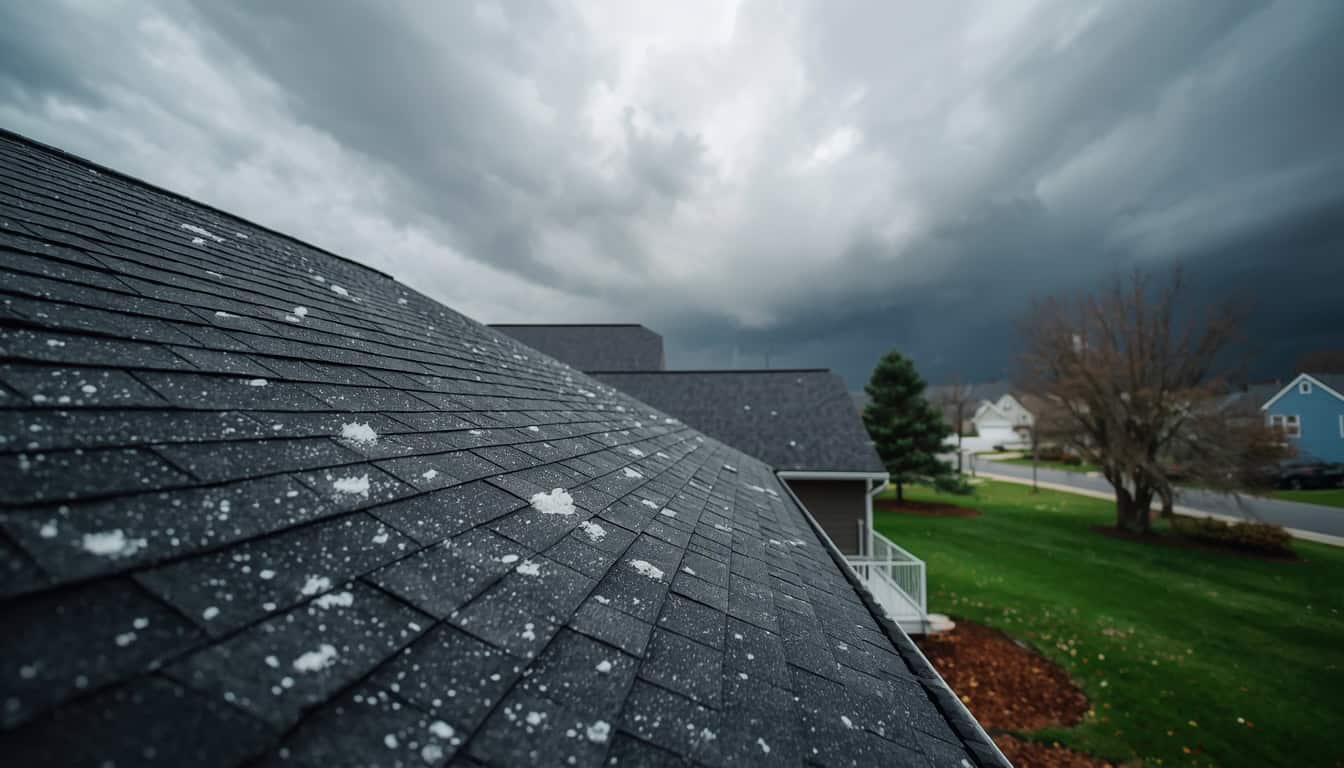
After every major storm in McHenry County, they show up. Trucks with out-of-state plates. Door-knockers with polo shirts and laminated badges. Flyers on your door offering “free roofs.” Some are legitimate traveling crews. Most are not.
Red Flags — Walk Away If You See These
- No local address. They give you a PO box, a cell phone, or “we’re based in [another state].” If they don’t have a physical office you can drive to, they won’t be around when there’s a warranty issue.
- “Free roof” promises. Nobody gives you a free roof. What they mean is “we’ll waive your deductible” — which is insurance fraud in Illinois.
- They want you to sign something at the door. Legitimate contractors don’t pressure you into contracts during a first visit. Especially not AOB documents.
- Large upfront deposits. More than 20% upfront before work starts is a red flag. Reputable contractors don’t need your money before they buy materials.
- Cash-only or check-only. Real businesses accept multiple payment methods and provide itemized invoices.
- They “happen to be in the neighborhood.” This line is used by every door-knocker in the country. A real local company doesn’t need to canvass after storms.
- No Illinois roofing license. Illinois requires a roofing license for any roofing work. Ask for the number and verify it at obre.illinois.gov
- They can’t show you a Certificate of Insurance. Ask for it. Call the insurance company on the certificate to verify it’s active. A real contractor carries $1M+ in general liability and workers’ comp.
Questions to Ask Any Storm Damage Contractor
- How long have you been in business at your current address? (Google the address — is it an actual office or a UPS Store?)
- What is your Illinois roofing license number? (Verify at obre.illinois.gov)
- Can I see your Certificate of Insurance? (Should show GL and WC coverage)
- Do you use your own crews or subcontractors? (Not a dealbreaker, but you should know)
- What manufacturer certifications do you hold? (CertainTeed SELECT, GAF Master Elite, Owens Corning Platinum — these require training and volume)
- Will you provide a written scope of work before I sign anything? (Yes is the only acceptable answer)
- What’s your warranty on labor? (Material warranties come from the manufacturer — labor warranties come from the contractor. If they’re gone next year, that warranty is worthless.)
Hiring a Contractor for Your Repairs?
Use our 15-Question Contractor Checklist to make sure you are hiring someone who will still be around in 10 years. Includes a printable scorecard to compare contractors side by side.
Emergency & Temporary Repairs
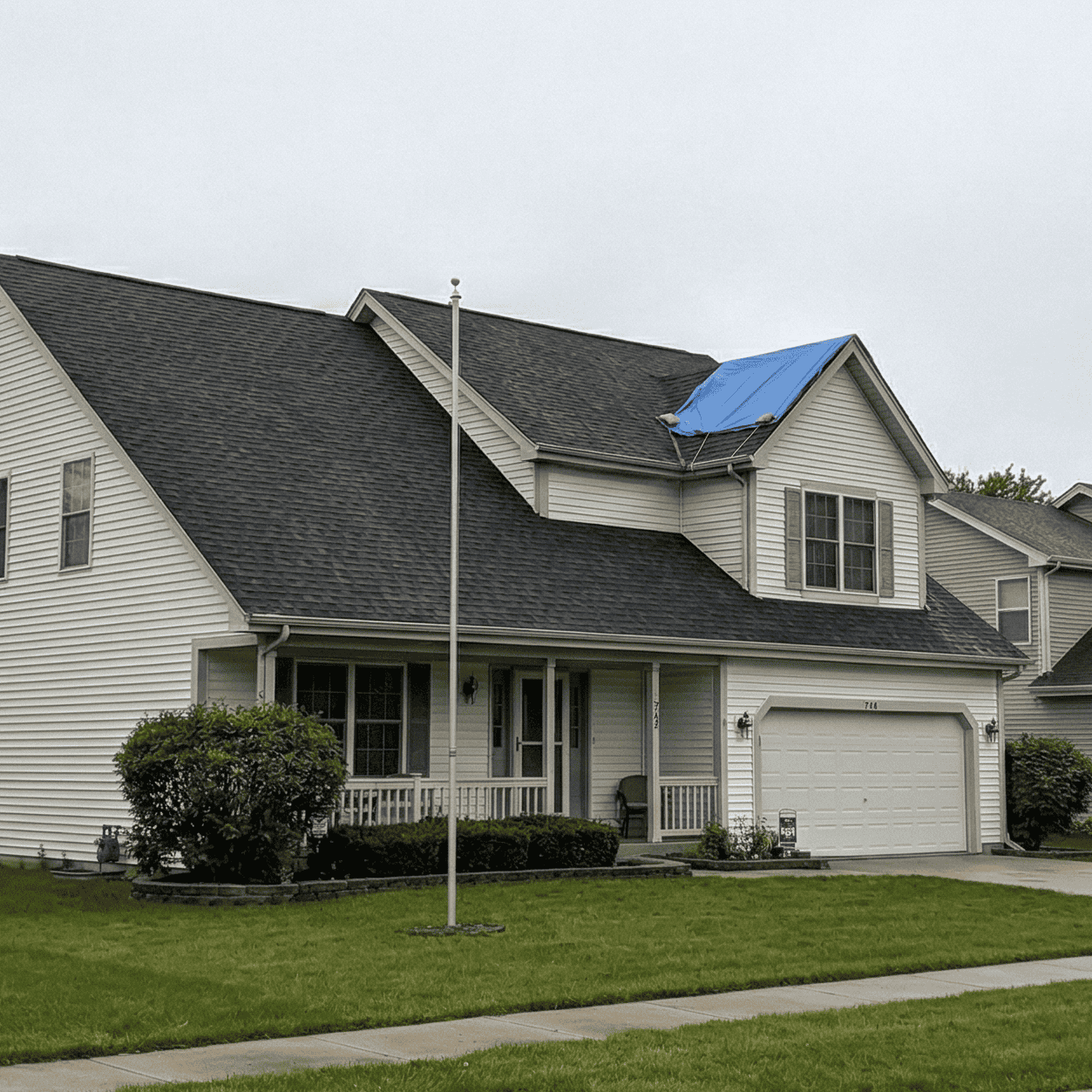
Your insurance policy requires you to take reasonable steps to prevent further damage. If your roof is leaking, that means getting a tarp on it. If a window is broken, that means boarding it up. Here’s the important part: save every receipt. Your insurance company should reimburse these costs as part of your claim.
What You Can Do Yourself
- ☐ Place buckets under active leaks and move furniture/electronics away from water
- ☐ Cover broken windows with plywood or heavy plastic sheeting and tape
- ☐ Clear fallen branches from your roof if you can safely reach them from the ground
- ☐ Redirect water away from your foundation if downspouts are damaged
- ☐ Document all temporary repairs with photos — before, during, and after
What to Call a Professional For
- ☐ Roof tarping — do NOT get on your roof. Call a contractor with proper equipment.
- ☐ Tree removal, especially if a tree is resting on your home or near power lines
- ☐ Board-up services for large openings or structural damage
- ☐ Water extraction if you have significant interior flooding
Your Storm Damage Timeline at a Glance
First 2 Hours
Ensure safety. Document everything with photos and notes. Photograph hail before it melts.
Within 24 Hours
File your insurance claim. Call a local contractor for an inspection. Make temporary repairs and save receipts.
Days 3–14
Insurance adjuster inspects your home. Be present. Share your contractor’s inspection report. Get a copy of the adjuster’s report.
Days 14–30
Receive your insurance company’s settlement offer. Compare it to your contractor’s estimate. Request a supplement or re-inspection if the numbers don’t match.
Days 30–90
Repairs completed by your chosen contractor. Final walkthrough and sign-off. If you have an RCV policy, submit the final invoice to your carrier to collect depreciation holdback.
Don’t Forget the Depreciation Holdback
If you have a Replacement Cost Value (RCV) policy, your first check only covers the depreciated value. After repairs are completed, you submit the final invoice to your insurance company and they release the remaining “depreciation holdback.” This can be thousands of dollars. A lot of homeowners don’t know about this and leave money on the table.
McHenry County Emergency Resources
| Resource | Contact |
|---|---|
| ComEd (downed power lines) | 1-800-334-7661 |
| Nicor Gas (gas leaks) | 888-642-6748 |
| McHenry County Emergency Management | 815-338-6400 |
| Crystal Lake Non-Emergency | 815-356-3620 |
| IL Roofing License Verification | obre.illinois.gov |
| IL Dept. of Insurance (complaints) | 866-445-5364 |
NEED A STORM DAMAGE INSPECTION?
Call or Text (815) 356-9020
Free inspections for McHenry County homeowners
Innovative Home Concepts, Inc. • 4410 IL-176, Ste 1, Crystal Lake, IL 60014
IL Roofing License #104.015093 • CertainTeed SELECT ShingleMaster • James Hardie Elite Preferred
$1M General Liability • $1M Workers’ Comp • $1M Umbrella • Family-owned since 2005