McHenry Siding Showdown: Vinyl vs. Fiber Cement vs. Engineered Wood – Which Wins?
Introduction: Siding That Stands Up to McHenry’s Wild Weather
Hey there, McHenry homeowners! If you’re staring at your house wondering what to slap on the outside to keep it safe and looking sharp, you’re not alone. Picking the right siding around here is like choosing the perfect winter coat—it’s got to handle the cold, the wet, and still make you look good. I’m Rhett Wilborn, president and founder of Innovative Home Concepts, and after 30 years in the home improvement game, I’ve seen McHenry Siding take a beating from our wild weather swings. Today, we’re diving deep into the big three: vinyl, fiber cement, and engineered wood. Which one’s the champ for our neck of the woods? Stick with me—I’ll break it down so simple even your cousin who thinks a hammer’s just a loud toy can get it.
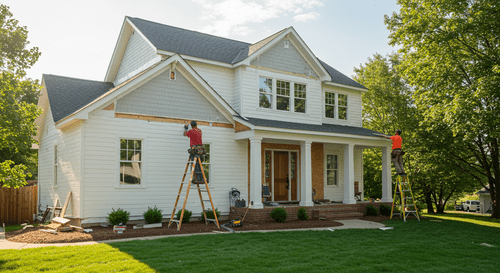 McHenry’s got a climate that’s tougher than a two-dollar steak—freezing winters with snow piling up like uninvited guests, and summers so humid you’d swear you’re swimming to the mailbox. Your siding’s got to be a warrior, not a wimp. We’re talking freeze-thaw cycles that can crack weaker materials, moisture that sneaks in and causes rot, and temperature swings that test a house like a kid tests a parent’s patience. So, let’s roll up our sleeves and figure out which siding can take the heat—or rather, the cold—and still come out swinging.
Why Siding’s a Big Deal in McHenry
Let’s set the stage. McHenry, Illinois, sits in a humid continental climate zone, which is a fancy way of saying we get the full weather buffet. Winter lows dip to about 12°F in January, with snow dumping an average of 38 inches a year—enough to make you wonder if you’re living in a snow globe. Then summer rolls in with highs around 82°F in July, and humidity that makes your shirt stick like a bad date. This isn’t just trivia; it’s the playbook your siding has to follow. It’s got to shrug off freezing temps without cracking, keep moisture out to avoid moldy surprises, and not warp when the seasons flip-flop faster than a politician’s promises.
Siding isn’t just a pretty face—it’s your home’s armor. Pick the wrong stuff, and you’re looking at repairs that’ll drain your wallet faster than a kid at a candy store. Get it right, and you’ve got protection, energy savings, and a house that looks good enough to make the neighbors jealous. So, let’s pit vinyl, fiber cement, and engineered wood against each other and see who’s got the guts to handle McHenry.
Vinyl Siding: The Wallet-Friendly Workhorse
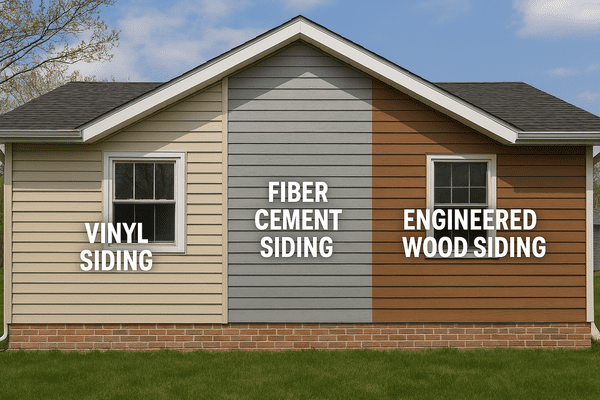
Vinyl siding’s like that reliable old pickup truck—nothing fancy, but it gets the job done on a budget. Made from polyvinyl chloride (PVC), it’s lightweight, comes in a ton of colors, and doesn’t ask much from you in terms of upkeep. You can hose it down and call it a day. At $8 to $12 per square foot, it’s the cheapest of the trio we’re looking at today, which makes it a go-to for folks watching their pennies.
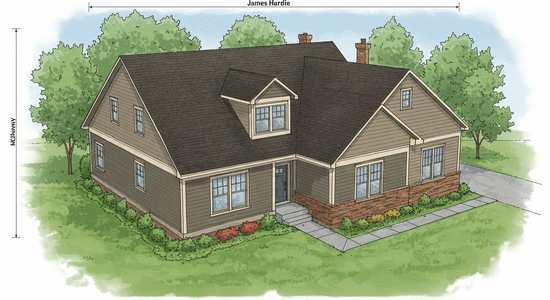 But here’s where the rubber meets the road—or rather, where the cold meets the crack. Vinyl can get brittle when the mercury drops below freezing, and in McHenry, that’s not a rare event. A stray branch or a kid’s errant snowball could turn your siding into a jigsaw puzzle. It’s got a lifespan of 20 to 40 years, but in our winters, you might be leaning toward the lower end. Plus, it’s not winning any insulation awards—its R-value’s a measly 0.61 without extra backing, so your heating bill might remind you of that choice come January.
Pros: Cheap, easy to clean, and moisture-resistant. Cons: Cracks in the cold, fades over time, and isn’t eco-friendly thanks to that PVC makeup. For McHenry, vinyl’s a decent pick if you’re strapped for cash, but don’t be shocked if you’re calling us for siding repair McHenry IL sooner than you’d like.
Fiber Cement Siding: The Heavyweight Hero
Now, let’s step up to fiber cement siding—the heavyweight champ that doesn’t flinch at McHenry’s weather tantrums. Made from cement, sand, and cellulose fibers, this stuff’s built like a tank. It laughs off fire, shrugs at insects, and tells moisture to take a hike. At $18 to $22 per square foot, it’s pricier upfront, but it’s playing the long game with a lifespan of 50 years or more. Maintenance? Paint it every decade or so, and you’re golden.
 What makes fiber cement a rock star in McHenry? It doesn’t bat an eye at freeze-thaw cycles. While vinyl’s shivering and cracking, fiber cement stays steady, barely expanding or contracting with temperature shifts. It’s like the cool-headed friend who doesn’t lose it in a crisis. Pair it with some insulation, and you’ve got a combo that keeps your house cozy without breaking the bank on energy bills. Plus, it can mimic wood, brick, or stucco—your house can look like a million bucks without the million-dollar price tag.
Pros: Tough as nails, weather-proof, and versatile in style. Cons: Costs more upfront and weighs a ton, so installation’s not a DIY weekend project. For McHenry, this is my top dog—it’s built to last through our brutal winters and sticky summers.
Engineered Wood Siding: The Wood Wannabe with Swagger
Engineered wood siding struts in like vinyl’s cooler cousin, offering the warm, natural look of wood without the high-maintenance drama. It’s made from wood fibers and resin, pressed together under heat to create a durable, eco-friendly option. At $20 to $23 per square foot, it’s the priciest of the bunch, but it’s got a lifespan of 25 to 50 years if you treat it right—think regular painting or sealing to keep moisture at bay.
 In McHenry, engineered wood’s a bit of a diva—it looks great and handles cold better than real wood, but it demands attention. Our wet winters and humid summers mean you’ve got to stay on top of maintenance, or it’ll warp faster than a cheap umbrella in a storm. It’s got better insulation than vinyl, though, and it’s greener since it uses wood byproducts. If you’re after that classic wood vibe without the rot worries of natural timber, this could be your pick.
Pros: Wood-like charm, durable, and eco-friendly. Cons: Needs regular TLC, can warp if neglected, and costs a pretty penny. It’s a solid contender for McHenry, but it’s not as set-it-and-forget-it as fiber cement.
Installation Insights: What to Expect
Alright, let’s talk about getting this stuff on your house—because picking the siding is only half the battle. Installation’s where the rubber meets the road, and in McHenry, it’s got to be done right to handle our weather. Vinyl’s the lightweight champ here—quick to install, often a two-day job for a standard house. It’s forgiving, too; you don’t need a rocket scientist to hang it. But here’s the catch: if it’s not secured properly, those winter winds can turn it into a flapping mess. I’ve seen DIY jobs where the siding looked like it was waving goodbye after the first storm.
Fiber cement’s a different beast. It’s heavy—think of it like hauling bricks up a ladder—so it needs a pro crew with some muscle and know-how. Installation takes longer, maybe three to five days, and you’ve got to cut it with special blades to avoid dust that’ll make you cough like you’ve smoked a pack. But once it’s up, it’s locked in tight—McHenry’s freeze-thaw cycles won’t budge it. Just make sure the installer seals the edges right, or moisture can sneak in like an uninvited guest.
Engineered wood splits the difference. It’s lighter than fiber cement but trickier than vinyl—think of it like assembling a giant puzzle that needs painting after. It takes about three days, and you’ve got to nail it (pun intended) with proper spacing and sealing. McHenry’s humidity means you can’t skimp on the prep—skip the underlayment or rush the finish, and you’re begging for warping. I’ve seen gorgeous installs turn into wavy disasters because someone cut corners. Moral of the story? Hire pros who know McHenry’s quirks.
Energy Efficiency and Your Wallet
Here’s something else to chew on: how does your siding choice hit your energy bills? In McHenry, where winter feels like a deep freeze and summer’s a steam bath, insulation matters. Vinyl’s the weak link—its R-value’s a measly 0.61, like wearing a t-shirt in a blizzard. You can beef it up with insulated backing, bumping it to maybe 2 or 3, but that’s extra cash and still not a game-changer. I’ve had clients tell me their heating bills spiked after a vinyl job—cozy house, sure, but at what cost?
Fiber cement doesn’t insulate much on its own—R-value’s around 0.5—but it’s a champ when paired with foam board or batt insulation. Get that combo right, and you’re looking at an R-value of 13 or more behind it, keeping your house snug without cranking the thermostat. It’s like wrapping your home in a quilt—McHenry winters don’t stand a chance, and your wallet stays happy. Plus, it blocks air leaks better than vinyl, so you’re not bleeding cash through gaps.
Engineered wood’s got a slight edge over vinyl—R-value’s around 0.8 to 1—but it shines with proper insulation behind it, too. Think 10 to 15 R-value with the right setup. It’s not as airtight as fiber cement, though, so humidity can sneak in if seals aren’t tight. I’ve seen it save energy for folks who maintain it, but neglect it, and you’re back to square one. For McHenry, fiber cement’s the energy efficiency king, but engineered wood’s a contender if you’re diligent.
Breaking It Down: Cost, Lifespan, and McHenry Fit
Let’s put these contenders side by side with a little table action—because who doesn’t love a good chart to make sense of things?
| Siding Type | Cost per Sq Ft | Lifespan (Years) | Maintenance | McHenry Match? |
|---|---|---|---|---|
| Vinyl | $8 – $12 | 20-40 | Low | Good for budgets, risky in cold |
| Fiber Cement | $18 – $22 | 50+ | Low | Best overall |
| Engineered Wood | $20 – $23 | 25-50 | Moderate to High | Good with upkeep |
Vinyl’s the bargain buy, but it’s like buying a cheap pair of boots—they’ll get you through a season, but don’t expect miracles. Fiber cement’s the investment piece—costs more now, saves you later. Engineered wood’s the stylish middle child—pricey and needs care, but it’s got flair.
The Deep Dive: How They Handle McHenry’s Climate
Let’s get nerdy for a sec and talk specifics. McHenry’s freeze-thaw cycles are the real test—when water seeps in, freezes, expands, and thaws, it’s like nature’s own stress test for your siding. Vinyl’s PVC makeup doesn’t love this game. It can crack when it gets brittle, especially if it’s not the thick, high-grade stuff. I’ve seen vinyl jobs in McHenry where a harsh winter left it looking like a cracked windshield—not pretty.
Fiber cement, though? It’s like the guy who shows up to a snowball fight with a fortress. It doesn’t expand or contract much, so those freeze-thaw cycles barely faze it. Studies—like the ones from folks who geek out over building materials—show it holds up in cold climates better than most. It’s why I’ve got it on my own house. Humidity’s no match either; it’s got a tight seal against moisture, keeping mold and rot at bay.
Engineered wood’s a bit of a wild card. It’s tougher than real wood, sure, but it’s still got wood in its DNA. If you don’t keep it sealed, McHenry’s wet winters can sneak in and cause warping. I’ve seen it happen—beautiful install one year, wavy mess the next because the homeowner skipped the paint job. It’s got potential, but it’s not as bulletproof as fiber cement.
The Wow Factor: Stuff You Didn’t Know
Here’s where I blow your mind a little. Did you know vinyl siding’s been around since the 1950s, but it wasn’t until the ‘70s that it really took off? Back then, it was all about aluminum, but vinyl swooped in with its low cost and easy install. Problem is, it hasn’t evolved much since—still struggles with cold the way it did decades ago.
Fiber cement’s got a cooler backstory. It’s been kicking around since the early 1900s, originally mixed with asbestos—yikes—before they swapped that out for cellulose fibers in the ‘80s. Now it’s a green machine, using recycled materials in some blends, and it’s so tough they’ve used it on commercial buildings that laugh at hurricanes.
Engineered wood’s the new kid, relatively speaking. It’s a product of the late 20th century, born from the push for sustainable building. Some versions even use sawdust from other projects—talk about recycling! But here’s the kicker: if you don’t maintain it, that eco-friendly vibe can turn into an eco-nightmare with premature replacement.
The Verdict: Who Wins in McHenry?
After 30 years of rehabbing houses, owning properties, and watching siding take a beating, I’m calling it: fiber cement siding’s the king of McHenry. It’s got the durability to handle our winters, the low maintenance to keep you sane, and the versatility to make your house pop. Vinyl’s a budget buddy, but it’s like putting a paper umbrella in a storm—don’t be surprised when it folds. Engineered wood’s got style, but it’s high-maintenance like a pampered pet.
 At Innovative Home Concepts, we’ve got your back with our exclusive InnoMAXX series of siding—built tough for McHenry’s climate—and we’re the only ones around with the GutterShutter Clog Free gutter system. Ready to upgrade your home’s armor? Hit us up for a free consultation and price quote. And if you’re hungry for more home improvement know-how, dig into our blog—it’s packed with tips to make you the smartest homeowner on the block.
Further Information
References
Want to geek out more? Here are some solid sources:
About the Author
Rhett Wilborn is the president and founder of Innovative Home Concepts, bringing over 30 years of home improvement expertise to the table. From flipping million-dollar homes to managing commercial properties, Rhett’s got the know-how and a knack for making tricky stuff simple. He’s your go-to guy for turning houses into homes that stand the test of time.